
Important Tips and Techniques on Digging in Volleyball for Beginner Players

Competition is key to developing players. The only practice environment in which you truly develop a player is a competitive arena.
Anson Dorrance
Source: Gold Medal Squared.
Wonder of Volleyball is reader supported. Some of the links contained in this post are affiliate links. If you click and purchase through those links, we’ll get a commission at no additional cost to you. Read our full disclaimer here.
Thanks in advance for supporting our work!
Are you a beginner player and you want to know everything about digging in volleyball?
Do you have any idea on how effective digging is important for defensive plays?
Keep reading till the end to find all the details!
One of the crucial aspects of your team’s defense in volleyball is digging. Having proper digging skills to the defensive players of your team will make it difficult for the opponents to score points and advance in a match.
So in this post, we’ll take a closer look at the skills needed for digging in volleyball and how you can effectively master them.
Let’s get started!
Did you know that a good dig doesn’t have to be perfect or fast? Many successful digs are intentionally sent high and slow, allowing teammates enough time to recover, transition and set up the next attack.
Tips and Techniques on Digging in Volleyball
Understanding What Digging Is and Why It Matters in Volleyball
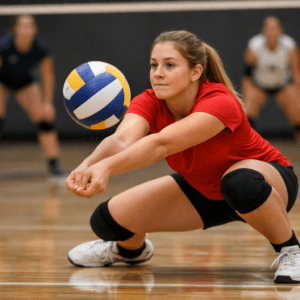
Digging is a defensive skill in volleyball used to prevent the ball from hitting the court after an opponent’s attack. It usually happens when a player receives a hard-driven spike or an aggressive shot and keeps the rally alive by controlling the ball upward for a teammate to play.
For beginner players, digging is one of the most important skills to learn because it directly impacts a team’s ability to defend and transition into offense. A successful dig gives your team a second chance to set up a play instead of losing the point immediately.
Even a simple, controlled dig can turn a strong attack into an opportunity to score.
Digging is not only about quick reactions. It also requires proper positioning, balance and focus.
Players must stay alert, read the attacker’s movement and be ready to react pretty swiftly most of the time. Unlike blocking, digging involves all back-row players, making it a shared responsibility that strengthens teamwork and communication on the court.
Most importantly, digging builds confidence for beginner players. Each successful dig boosts trust in defensive skills and encourages players to stay aggressive and positive, even when facing powerful hitters.
As players improve their digging skills, they become more reliable defenders and valuable contributors to the overall team performance.
Proper Ready Position for Effective Digging

The ready position is the foundation of effective digging in volleyball. Being in the correct stance allows players to react quickly, move efficiently and stay balanced when facing an opponent’s attack.
Without a proper ready position, even good instincts can result in late or uncontrolled digs.
- To start, stand with your feet slightly wider than shoulder-width apart and your knees bent. Your weight should be on the balls of your feet, not on your heels, so you can move in any direction instantly.
- Keep your body low but comfortable, maintaining a balanced and athletic posture.
- Your upper body should lean slightly forward, with your shoulders relaxed and your eyes focused on the attacker and the ball.
- Hold your arms in front of your body, elbows slightly bent and hands ready to form a solid platform when the ball is attacked. Avoid letting your arms hang too low or locking your elbows too early.
- Good posture also means staying light and active. Small, quick steps help you adjust your position rather than reaching for the ball.
- Remaining calm and alert in the ready position improves reaction time and control.
Why it is Important for Beginner Players?
For beginner players, consistently practicing the ready position helps develop better defensive habits. Over time, this stance becomes natural and allows players to react confidently, making digging more effective and controlled during matches.
Correct Arm and Platform Technique When Digging

In volleyball, using the correct arm and platform technique is essential for making controlled and accurate digs. A solid platform helps absorb the force of the ball and directs it toward a teammate instead of sending it out of control.
- To create a proper platform, extend both arms straight in front of your body and bring your forearms together. Your elbows should be locked but not stiff, and your shoulders should remain relaxed.
- Keep your forearms flat and even, as uneven arms can cause the ball to deflect unpredictably.
- Hand position is equally important. A common and effective method is to place one hand over the other with thumbs side by side and pointing downward.
- This creates a smooth, stable surface for the ball to contact. Avoid separating your hands or bending your wrists, as this weakens the platform.
- When digging, focus on using your legs and body to control the ball rather than swinging your arms. Slightly lift your platform by extending your legs while maintaining the same arm angle.
- This helps guide the ball upward with better accuracy and control.
Why it is Important for Beginner Players?
For beginner players, consistency is key. Practicing proper arm positioning and platform control builds confidence and improves defensive reliability.
Also, mastering this technique allows players to handle stronger attacks while keeping the ball playable for the rest of the team.
Reading the Opponent and Anticipating the Ball

Reading the opponent and anticipating the ball are crucial skills that help volleyball players improve their digging effectiveness. Instead of reacting late, good defenders learn to recognize cues that indicate where and how the ball will be attacked.
- Start by watching the hitter’s approach and body position. The angle of their shoulders, arm swing and jump can give clues about the direction and power of the attack.
- Setters also provide valuable hints—where the set goes often determines the type of hit that will follow. Keeping your eyes on the play before the hit helps you prepare early.
- Anticipation also depends on positioning. Understanding basic court coverage and knowing your defensive role allows you to stand in the right spot before the attack happens.
- Being slightly early and ready is far better than chasing the ball at the last moment.
- Communication with teammates plays a big role as well. Calling out tips like ‘line,’ ‘cross’ or ‘tip’ helps everyone react faster and move with purpose.
- Listening and responding to these calls improves team defense and reduces confusion.
Why it is Important for Beginner Players?
For beginner players, anticipation improves with experience and repetition. The more match situations you see, the better you become at predicting attacks.
this skill also boosts confidence, shortens reaction time and makes digging feel more controlled rather than rushed.
Must’ve Gear for Volleyball Players
Footwork and Body Movement for Better Digs

Good footwork and body movement are key elements of successful digging in volleyball. Moving quickly into the right position is often more effective than reaching for the ball with the arms alone.
Proper movement helps maintain balance and control during defensive plays.
- Start by staying light on your feet in the ready position. Use short, quick steps to adjust your position as the ball comes toward you. Avoid crossing your feet or taking large steps, as this can slow you down and throw off your balance.
- Instead, shuffle sideways or forward while keeping your body low and stable.
- Your body should move behind the ball whenever possible. This allows you to face the target and create a stronger, more accurate platform.
- Keep your chest slightly forward and your core engaged to stay balanced, especially when reacting to fast or unpredictable attacks.
- When digging low balls, bend your knees rather than your waist. This keeps your center of gravity low and helps you maintain control.
- For balls that require you to move forward, step through the dig instead of reaching, allowing your momentum to guide the ball upward.
Why it is Important for Beginner Players?
Consistent practice of footwork drills improves reaction time and confidence for beginner players. As footwork becomes more natural, digging feels smoother, more controlled and far more reliable during matches.
Common Digging Mistakes Beginners Should Avoid
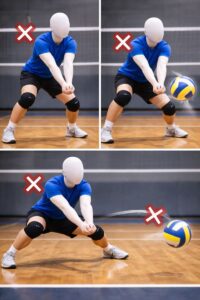
When learning to dig in volleyball, beginner players often make a few common mistakes that affect control and consistency. Recognizing and correcting these errors early can greatly improve defensive performance.
- One frequent mistake is standing too upright or flat-footed. Without a low, athletic ready position, players react late and struggle to move quickly. Staying balanced and on the balls of your feet is essential for effective digging.
- Another common issue is swinging the arms at the ball. Digging should rely on a firm platform and controlled body movement, not exaggerated arm swings. Swinging causes the ball to fly unpredictably and reduces accuracy.
- Improper platform formation is also a problem for beginners. Bent elbows, separated arms or uneven forearms make it difficult to control the ball. Keeping a solid, flat platform helps absorb the impact of the attack and directs the ball upward.
- Many beginners also reach for the ball instead of moving their feet. Reaching throws off balance and leads to weak digs. Proper footwork and positioning allow the body to stay behind the ball for better control.
- Lastly, hesitation can hurt defensive plays. Second-guessing leads to slow reactions and missed opportunities. Playing with confidence and committing to each dig helps build trust in your skills and improves overall defensive effectiveness.
Simple Drills to Improve Digging Skills for Beginners
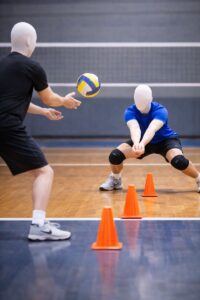
Practicing simple and valuable drills is one of the best ways for beginner players to improve their digging skills. These drills focus on building proper technique, reaction time and confidence without overwhelming the player.
- One effective drill is the partner toss and dig. A partner gently tosses or hits the ball toward the defender, who focuses on forming a solid platform and controlling the ball upward. This helps beginners develop proper arm positioning and ball control.
- Another useful drill is the wall dig drill. Players dig the ball against a wall, aiming to keep the ball controlled and within reach. This drill improves consistency, platform control and quick adjustments.
- The coach or partner roll drill is also helpful. The ball is rolled or lightly tossed in different directions, forcing the player to move their feet and stay low. This encourages good footwork and body positioning rather than reaching.
- For reaction improvement, beginners can practice short-distance hits or controlled spikes. The goal is not power but quick recognition and proper movement into the dig.
Regular repetition of these drills builds muscle memory and confidence. Over time, beginner players will notice better control, quicker reactions and more reliable digs during matches.
FAQs on Tips and Techniques on Digging in Volleyball
How is Digging Different From Passing in Volleyball?
Digging is mainly used to defend against hard-driven attacks or spikes, while passing is usually done to receive serves or free balls. Digs often require quicker reactions and lower body positioning compared to standard passes.
Do Beginner Players Need to Dig Every Ball Perfectly?
No. For beginners, the goal is to keep the ball playable, not perfect. Even a controlled upward dig that allows a teammate to make the next play is considered successful.
Can Shorter Volleyball Players be Good at Digging?
Absolutely. Digging relies more on anticipation, quick footwork and proper technique than height of the player. Many excellent defenders succeed because of speed, positioning and reading various match situations well.
Conclusion
There’s no doubt that a successful dig is as efficient as denying a point to your opponent. Also, it’s a moral victory for your team and the whole momentum of a play can be completely changed after a dig.
I am sure that this post would have given you a clear overview on digging in volleyball and how this particular skill effectively impacts every play of a match.
It’s your turn now!
What are your thoughts about this skill?
Would you like to add any tip that you follow while performing a dig during the match?
Kindly share them in the comments section below!
Related Posts
How to Set in Volleyball? Crucial Tips and Techniques you must know!
Blocking in Volleyball: Here’s Everything You Need to Know!
The Only Guide You Need to Know About Spiking in Volleyball
LET’S BE SOCIAL!

This is really helpful, and I’m happy I learned something new. I’ll practice my arm positioning more for stronger attacks.
Hi Clarice, super happy to hear that you’ve learned some new techniques and tips from this post. All the very best for mastering your arm position!
Such great advice for the Volleyball players! Learning that a dig should be high and slow rather than perfection is a relief for a beginner. Staying low really helps reaction time. Thanks for these tips.
Hi Everything Enchanting, thanks a lot for your encouraging words. I totally agree with your points.
This was a great read! I played volleyball in high school and I think you described all the techniques perfectly. Thanks for sharing!
Hi Kelly Krebs, thanks for your comment. Glad to know that you played volleyball during your high school days and these tips on digging useful and relatable.
I like what you said about second-guessing and how it’s important to stay confident and committed. You always have such good advice that translates into regular life stuff, too! Thank you!
Hi Kat Stano, thanks for your kind words. I am glad to hear that you found these tips helpful and relatable. I totally agree with your first point.
I used to play volleyball in the school. These tips are very helpful. Thanks for sharing.
Hi Dee, thanks and glad to know that you played volleyball during your school days.
I love how you’ve put imagery with this post. It makes it so much easier to understand. The technique and the imagery go hand in hand. This is super helpful and informative.
Hi Claire Mac, thank you so much!
It’s always good to hear about different tips for volleyball players! Thank you for sharing these.
Hi Jupiter Hadley, so glad that you found these tips useful!
This was a great read. I’m always so impressed by their athleticism, so learning a little about what goes into it is always interesting.
Hi Ben, thank you very much.
I always love these posts about technique. So much more goes into it than a casual observer would think!
Hi Beth, thanks a lot.
I had no idea that was called digging. It is a good move to master.
Hi Melanie E, glad to know that you’ve learned something new about volleyball from this post.
Love this informative post and it is perfect for anyone looking to get into the game of Volleyball. I always did enjoy Volleyball in PE class and these tips are spot on!
Hi Melissa Cushing, thank you very much. Glad to know that you found these tips helpful for beginner volleyball players and you enjoyed playing volleyball during your school days.
I really enjoyed your tips on digging in volleyball and how you broke down the technique so clearly. I learned a lot just from reading this. Corinne x
Hi Corinne, thanks for your comment. Very glad to know that you found these tips helpful and you learned new things about digging in volleyball.
Sending the ball high and slow during a defensive play is a total game changer for the rest of the team. Keeping that rally alive during a tough spike feels like a massive relief.
Hi Kat, I agree.
Volleyball is a physically demanding sport, and these excellent tips and techniques can help you practice and master those simple skills you need to play volleyball properly!
Hi Lucy, I totally agree with your points!
Great tips. It’s brilliant to know more about the defensive art of digging in volleyball. It’s a sport that my daughter is very interested in playing.
Hi Yeah Lifestyle, thanks for your comment. Glad to know that you found these tips helpful and happy that your daughter is very interested to play volleyball. Convey my best wishes to her!
such a comprehensive guide to the techniques, thank you!
Hi Elizabeth, very glad that you found these tips helpful!
oh wow, this is amazing. I kept on thinking about the toll digging in takes on the knees, no wonder they all wear knee protection, makes so much sense. I love this sport.
Hi Karen, digging does take its toll on the knees. Glad to know that you love volleyball.
I’ve definitely made some of those mistakes when digging in the past. Your tips are great and will help me improve the next time I play.
Hi Natalie, thanks for your comment. Glad to know that these tips aided you to correct your previous mistakes when digging in volleyball and will help you play better next time.
Great breakdown on digging technique! This is super helpful for players wanting to improve. The tips are clear and easy to follow — thanks for sharing!
Hi Jais, thank you very much and so happy to know that you found these tips helpful.