
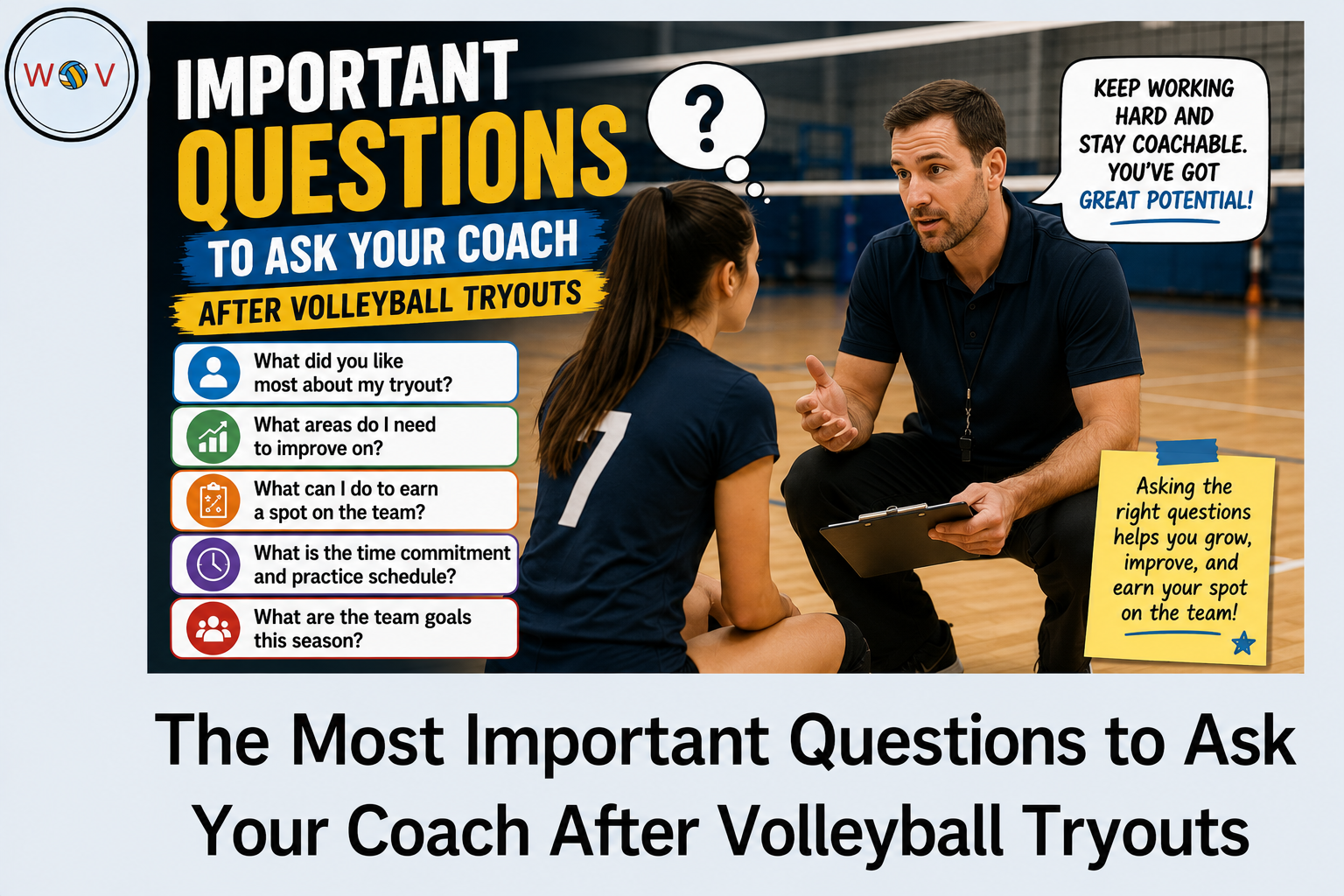
The Most Important Questions to Ask Your Coach After Volleyball Tryouts
We are not a team because we work together, we are a team because we respect, trust, and care for each other.
An inspirational quote for players of a volleyball team
Source: Strength and Power for Volleyball.
Wonder of Volleyball is reader supported. Some of the links contained in this post are affiliate links. If you click and purchase through those links, we’ll get a commission at no additional cost to you. Read our full disclaimer here.
Thanks in advance for supporting our work!
Is it important to talk to the team coach you are trying out for after a volleyball tryout?
What are some important questions to ask your coach after volleyball tryouts?
If you want all the details, keep reading till the end!
This is a dreaded moment for most players who are attending a volleyball tryout for the first time. They don’t know what to do.
They may want to talk to the coach but they don’t know whether it’s important/necessary and what to ask.
In this post, we’ll take a closer look at the importance of talking to the coach after the end of a volleyball tryout and what questions to ask.
Let’s get started!
Did you know that players who respectfully seek feedback after tryouts are often viewed as individuals who are serious about improving? Even if they don’t make a team initially, their willingness to learn can leave a positive and lasting impression on coaches.
Important Questions You Need to Ask Your coach After Volleyball Tryouts
Why It’s Important to Talk to Your Coach After Tryouts
Speaking with your coach after volleyball tryouts can be one of the most valuable steps you take as a player, regardless of the outcome. Whether you made the team, were placed on a different squad or were not selected, a respectful conversation with your coach can provide insights that help you improve for future opportunities.
- Coaches observe much more than a player’s technical skills during tryouts. They also evaluate effort, communication, attitude, teamwork and the ability to learn.
- Asking for feedback allows you to understand which areas stood out positively and which ones need more attention. Instead of making assumptions about your performance, you receive guidance directly from the person who evaluated you.
- Having this conversation also demonstrates maturity and a willingness to improve. Coaches appreciate players who are eager to learn and who accept constructive feedback with a positive attitude.
- Even if the feedback is difficult to hear, viewing it as an opportunity for growth can help you become a stronger and more confident player.
- Remember that the goal of talking to your coach is not to challenge their decision or ask them to change the outcome of the tryout. Rather, it is to gain valuable advice that you can apply in your future practices, matches and tryouts.
- Every conversation is an opportunity to learn something new and take another step toward becoming a better volleyball player.
What Did I Do Well During the Tryout?
One of the best questions you can ask your coach after volleyball tryouts is, ‘What did I do well during the tryout?’ While many players focus only on what they need to improve, understanding your strengths is just as important for long-term development.
- Your coach may point out positive qualities that you didn’t even realize you demonstrated. Perhaps you communicated well with teammates, maintained a positive attitude, showed strong defensive skills or consistently made smart decisions on the court. Identifying these strengths helps you recognize what made a positive impression and encourages you to continue developing those qualities.
- This question also gives you confidence. Receiving constructive feedback reminds you that your hard work has paid off and that you already possess skills that can contribute to a team. Instead of leaving the tryout wondering whether everything went wrong, you gain a clearer understanding of what you did successfully.
- As your coach shares their feedback, listen carefully without interrupting. If they mention a specific skill or habit, consider how you can continue building on it during practices and future competitions.
- Knowing your strengths allows you to approach your training with greater confidence while continuing to improve other areas of your game.
What Areas Should I Need to Improve?
After learning what you did well during the tryout, the next question to ask your coach is, ‘What areas do I need to improve?’ This question shows that you are willing to learn, accept feedback and become a better player.
More importantly, it helps you focus your training on the areas that will have the greatest impact.
- Your coach may point out technical skills you need to improve such as passing, serving, setting, hitting, blocking or defensive positioning. They may also mention qualities beyond volleyball skills you must focus on including communication, court awareness, decision-making, consistency or confidence during competitive and critical match situations. Receiving honest feedback gives you a clearer understanding of what coaches expect from players at that level.
- When your coach shares suggestions, avoid becoming defensive or discouraged. What you can do instead is to listen carefully and consider asking a follow-up question if you need clarification. Understanding exactly what needs improvement will make it easier to create a practice plan and measure your progress over time.
- Remember that every volleyball player, regardless of experience, has areas they can improve. Constructive feedback is not a sign of failure. It is an opportunity to grow.
By using your coach’s advice to guide your training, you can return to future tryouts as a more complete, confident and well-prepared player.
Must’ve Gear for Volleyball Players
What skills should I prioritize in my training?
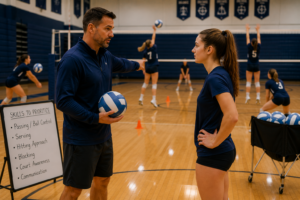
Once you understand the areas you need to improve, ask your coach, ‘What skills should I prioritize in my training?’ This question helps you focus on the improvements that will have the greatest impact instead of trying to work on everything at once.
- Volleyball requires players to develop a wide range of skills, but not every skill is equally important for every player. Depending on your position, experience and current ability, your coach may recommend prioritizing passing, serving, footwork, attacking, blocking, defensive positioning or ball control. They may also encourage you to improve physical qualities such as speed, agility, endurance or your overall vertical jump.
- Having a clear training priority allows you to create more effective practice sessions. Rather than spreading your time across too many areas, you can dedicate extra effort to the skills your coach believes will help you progress the fastest. As those skills improve, you can gradually shift your focus to other aspects of your game.
- Be sure to listen carefully and take note of your coach’s recommendations. Their advice is based on observing your performance during the tryout and understanding what is expected at your current level.
Through prioritizing the right skills, you can train with greater purpose, build confidence in your abilities and return to future tryouts better prepared.
What Can I Do to Increase My Chances Next Time?
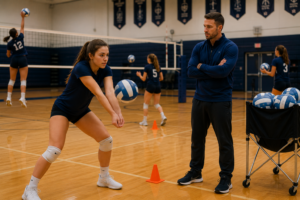
If you were not selected for the team or simply want to perform even better in future tryouts, ask your coach, ‘What can I do to increase my chances next time?’ This question demonstrates a growth mindset and shows that you are committed to becoming a better player rather than dwelling on disappointment.
- Your coach may recommend attending additional practices, improving your physical fitness, gaining more match experience or developing specific technical skills. They might also suggest working on qualities such as communication, leadership, consistency or confidence under pressure. These insights can help you understand what coaches value and where you should focus your efforts before the next tryout.
- Be open to the feedback you receive, even if it isn’t what you expected. Every suggestion is an opportunity to improve and become a more well-rounded player. Instead of comparing yourself to others, concentrate on making steady progress in the areas your coach identifies.
- Before ending the conversation, thank your coach for taking the time to provide feedback. Showing appreciation reflects good sportsmanship and leaves a positive impression.
- When you follow their advice and committing to continuous improvement, you’ll not only increase your chances at future volleyball tryouts but also continue developing into a stronger, more confident and coachable player.
How to Ask Questions Respectfully and Professionally
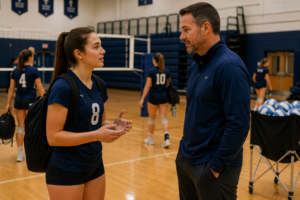
The way you ask your coach for feedback is just as important as the questions you ask. A respectful and professional approach shows maturity, good sportsmanship and a genuine desire to improve.
Coaches are often more willing to share helpful advice when players communicate politely and are open to learning.
- Choose an appropriate time to speak with your coach. Avoid interrupting them while they are busy managing the team or speaking with other players. Wait for a suitable moment and politely ask if they have a few minutes to discuss your performance during the tryout.
- As your coach responds, listen carefully without interrupting or becoming defensive. Even if the feedback is difficult to hear, remain positive and view it as an opportunity to grow. If something is unclear, respectfully ask a follow-up question so you fully understand their advice.
- Finally, thank your coach for their time and feedback. A simple expression of appreciation leaves a positive impression and demonstrates that you value their guidance.
- Remember, the purpose of the conversation is not to argue about the tryout results but to learn how you can become a better player. Approaching the discussion with respect, professionalism and a willingness to improve will help you make the most of the feedback and prepare you for future volleyball tryouts.
FAQs on Questions to Ask Your Coach After Volleyball Tryouts
Should You Ask Your Coach for Feedback Even if You Made the Volleyball Team?
Yes. Receiving feedback after making the team helps you understand your strengths and identify areas for improvement. It also shows your coach that you’re committed to continuous learning and becoming a more valuable team player throughout the season.
What should You Do If Your Coach Doesn’t Have Time to Talk After Tryouts?
Respect your coach’s schedule and ask if there is a better time to meet or communicate. Many coaches are willing to provide feedback later by arranging a short meeting or speaking before or after a future practice.
Is Asking Questions After Tryouts Improve Your Relationship with Your Coach?
Yes, provided you approach the conversation respectfully. Asking thoughtful questions, listening carefully and appreciating your coach’s feedback demonstrates maturity, coachability and a genuine desire to improve, which can help build trust and mutual respect over time.
Conclusion
You may feel nervous but as I said earlier, there are so many benefits of talking to the coach and asking the right questions after a volleyball tryout.
I am sure that by now, you have a clear idea on questions to ask your coach after volleyball tryouts and the importance of it.
It’s your turn!
What are your thoughts about this guide?
Which is your preferred question to ask first to your coach after a volleyball tryout from this list?
Share your thoughts in the comments section below!
Related Posts
10 Volleyball Tryout Drills You Must Know as a Player
How To Tryout For Volleyball With No Experience? Here’s What You Need to Know!
LET’S BE SOCIAL!

I like this blog a lot- especially the part about etiquette and professionalism. Goes hand in hand with being a sports player.
Hi JRC, thank you very much! Glad to know that you like this blog.
That’s a very helpful guide. These are important questions to ask first to the coach after a volleyball tryout. Thanks for sharing.
Hi Khushboo, thank you very much! Glad to know that you found this post helpful.