
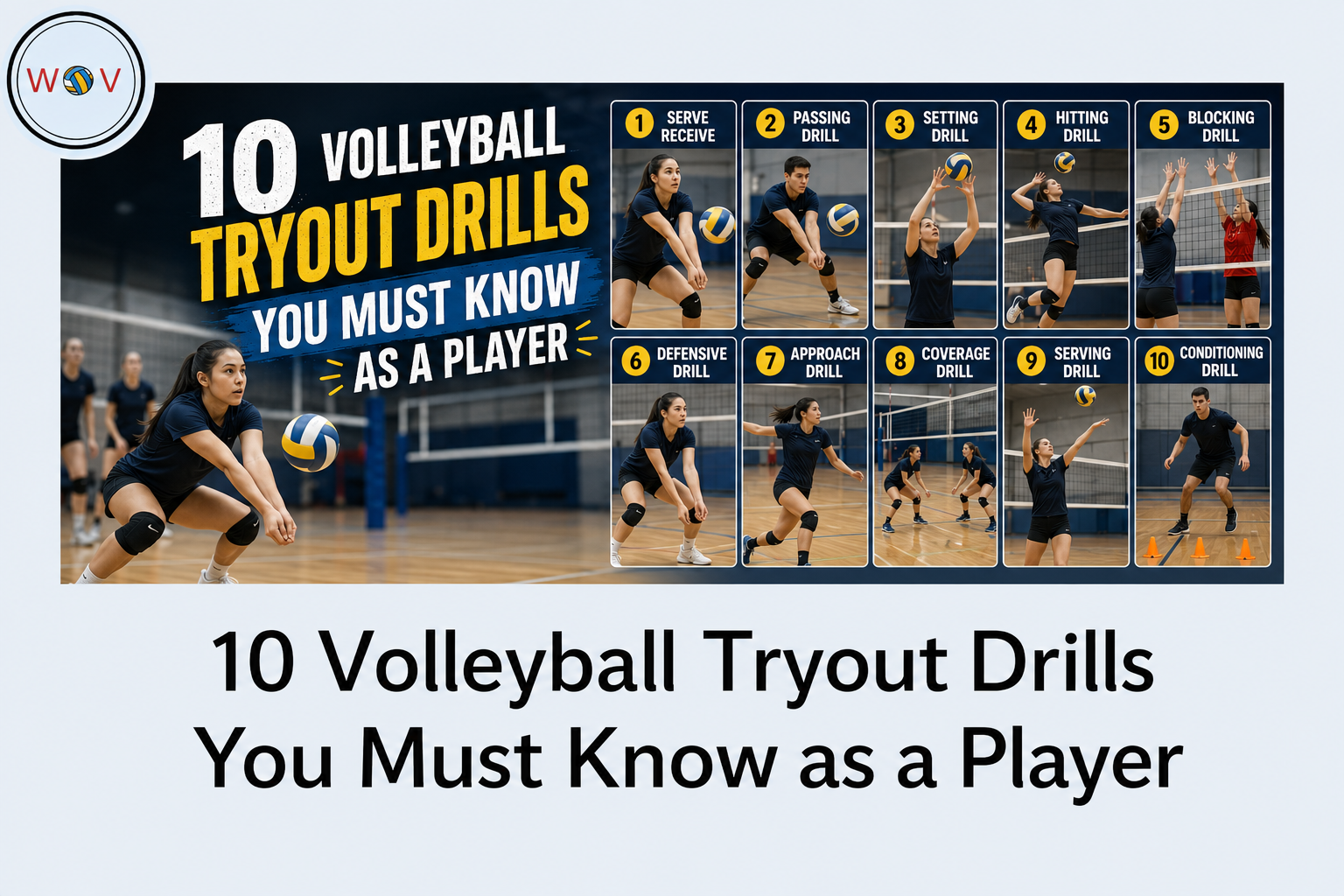
10 Volleyball Tryout Drills You Must Know as a Player
Chemistry is as important as talent, you constantly have to work at it.
Lionel Hollins
Source: Dear Volleyball.
Wonder of Volleyball is reader supported. Some of the links contained in this post are affiliate links. If you click and purchase through those links, we’ll get a commission at no additional cost to you. Read our full disclaimer here.
Thanks in advance for supporting our work!
What are the top volleyball tryout drills that are considered critical for players to get good at?
Which are the drills coaches mainly focus to evaluate players?
Keep reading to find all the answers!
A volleyball tryout is an important aspect during a player’s playing journey and knowing the fundamentals of the top volleyball tryout drills is essential for them.
In this post, we’ll take a closer look at the top volleyball tryout drills, how to perform each one and much more.
Let’s get started!
Did you know that some tryout drills are intentionally structured to create unpredictable situations? Coaches may be watching how quickly players adapt, communicate and make decisions under pressure rather than simply evaluating player’s overall skill level.
Volleyball Tryout Drills You Must Know
Why Volleyball Tryout Drills Matter
Volleyball tryout drills are designed to help coaches evaluate the skills and potential of every player in a structured and fair way. Rather than relying solely on scrimmages, coaches use specific drills to assess how well players perform the fundamental skills needed during a match.
Each drill focuses on a different aspect of the sport, such as passing, serving, setting, hitting, blocking, digging, movement and communication. These drills allow coaches to observe your technique, consistency, decision-making, work ethic and ability to follow instructions.
They also provide insight into how well you adapt to feedback and work with teammates.
For players, tryout drills offer an opportunity to showcase strengths while identifying areas that need improvement. Consistently practicing these drills before tryouts can boost your confidence, sharpen your fundamentals and help you perform under pressure.
Even if you make mistakes, demonstrating a positive attitude, strong effort and a willingness to learn can leave a lasting impression on coaches.
Ultimately, volleyball tryout drills are about much more than completing a series of skill-based actions. They help coaches identify players who possess the technical skills, athletic ability, teamwork and coachability needed to contribute to the team’s success. Preparing for these drills in advance gives you a better chance of standing out and performing at your best when tryout day arrives.
Passing Drill
Passing is one of the first skills coaches evaluate during volleyball tryouts because it forms the foundation of a team’s offense. A passing drill is designed to assess your ability to control the ball, maintain proper technique and consistently deliver accurate passes to the target.
- During this drill, focus on using a balanced athletic stance with your knees bent, shoulders forward and eyes on the ball. Keep your platform firm by placing your forearms together and avoid swinging your arms excessively. Instead, use your legs to generate controlled movement and direct the ball toward the setter or designated target.
- Coaches also pay close attention to your footwork. Move your feet quickly to get behind the ball instead of reaching or leaning whenever possible. Staying balanced allows you to make cleaner, more controlled passes.
- Communication is another important part of a passing drill. Call for the ball confidently to prevent confusion and demonstrate that you can work effectively with teammates. Even if a pass isn’t perfect, continue hustling and stay engaged throughout the drill.
- Remember, coaches aren’t necessarily looking for flawless passes every time. They want to see consistency, good technique, quick reactions and a positive attitude. Showing that you can remain composed, adjust to different serves/attacks and make controlled passes will leave a strong impression during volleyball tryouts.
Serving Drill
Serving is another essential skill that coaches evaluate during volleyball tryouts because it reflects a player’s consistency, control and confidence. A serving drill allows coaches to assess your technique, accuracy and ability to place the ball in different areas of the court.
- Before serving, take a moment to settle into your routine and focus on your target. It doesn’t matter what type of serve you use, maintain proper body positioning, a controlled toss and smooth contact with the ball. A consistent serving motion helps improve both accuracy and reliability.
- During the drill, prioritize getting the ball in play rather than trying to hit every serve with maximum power. Coaches value players who can consistently execute successful serves over those who frequently miss while attempting difficult shots. As your confidence grows, you can demonstrate your ability to vary the speed, depth, or placement of your serves.
- Pay attention to your follow-through and quickly prepare for the next play after the ball crosses the net. Coaches often observe how players transition from serving into a defensive position, as this reflects match awareness and readiness.
- Above all, remain confident regardless of the outcome of each serve. Missing an occasional serve is part of the game, but maintaining good technique, staying composed and responding positively to mistakes demonstrate maturity and coachability. Consistent execution, smart decision-making and a calm mindset can help you stand out during a serving drill.
Setting Drill
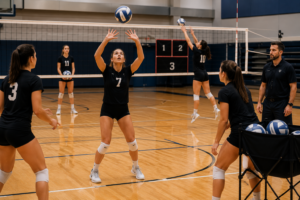
A setting drill helps coaches evaluate your ball control, hand positioning, footwork and decision-making. Even if you’re not trying out as a setter, demonstrating solid setting fundamentals shows that you can keep a play alive and contribute in different match situations.
- As the ball approaches, move your feet quickly to get underneath it instead of reaching from an awkward position. Position your body so you’re balanced, with your knees slightly bent and your hands above your forehead. Form a soft triangle with your thumbs and index fingers, then use your legs and fingertips to push the ball upward in one smooth motion.
- Focus on delivering high, accurate sets to the intended target rather than forcing the ball. Consistency is more important than flashy technique, as coaches want to see that you can make controlled decisions under pressure. Keep your movements calm and avoid holding or carrying the ball, as clean contact is essential.
- Communication also plays an important role during a setting drill. Call for the ball when appropriate and stay aware of your teammates’ positions. Showing confidence while working with others demonstrates that you understand the importance of teamwork.
- Throughout the drill, maintain a positive attitude and respond well to feedback. Coaches appreciate players who remain composed, learn from mistakes and continue making quality sets. Good footwork, accurate ball placement and effective communication will help you make a strong impression during tryouts.
Hitting Drill
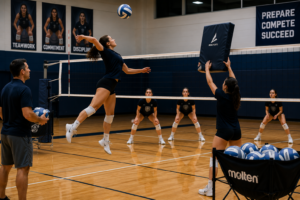
Hitting drill allows coaches to evaluate your approach, timing, arm swing and overall attacking technique. While powerful spikes can be impressive, coaches are often more interested in seeing controlled, consistent hitters who make smart decisions and maintain proper fundamentals.
- Begin by focusing on a smooth, balanced approach and proper footwork. Time your approach so you meet the ball at its highest point, allowing you to generate better control and power. As you jump, keep your eyes on the ball, reach high with your hitting arm and make clean contact while following through toward your target.
- Accuracy is just as important as power during a hitting drill. Rather than trying to hit every ball as hard as possible, aim to place your attacks in open areas of the court. Demonstrating control and the ability to adjust to different sets shows coaches that you can make effective decisions during a match.
- Don’t forget the importance of transitioning after each attack. Land under control, regain your balance and prepare for the next play. Coaches often observe how quickly players recover and stay involved instead of admiring their hit.
- Maintain a confident and positive attitude throughout the drill, even if every attack doesn’t go as planned. Coaches value players who communicate well, hustle between repetitions and respond positively to feedback. Combining proper technique, smart shot selection and consistent effort will help you make a strong impression during the drill.
Must’ve Gear for Volleyball Players
Blocking Drill
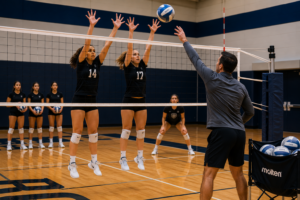
It helps coaches evaluate your timing, footwork, hand positioning and ability to react quickly at the net. Although height can be an advantage, coaches also look for players who demonstrate sound technique, good anticipation and the willingness to challenge every attack.
- Start in a balanced ready position with your knees slightly bent and your hands held in front of your shoulders. As you read the hitter, move laterally along the net using quick, controlled footwork to stay in position. Focus on timing your jump so you reach your highest point as the attacker contacts the ball.
- When blocking, extend your arms fully above the net and press your hands over it to reduce the angles available to the hitter. Keep your fingers spread and your hands strong to create a solid blocking surface. Avoid swinging your arms or reaching too early, as proper timing is more effective than simply jumping high.
- Recovery is just as important as the block itself. After landing, regain your balance immediately and prepare for the next play. Coaches pay attention to players who stay engaged, transition quickly and continue contributing defensively after each blocking attempt.
- Throughout the drill, communicate with your teammates and maintain a positive attitude. Even if you don’t record a block every time, showing good positioning, disciplined technique and consistent effort demonstrates that you understand your role at the net. These qualities can help you stand out during tryouts.
Digging Drill
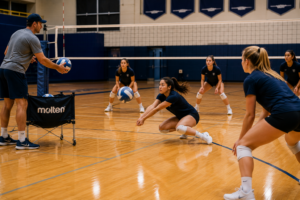
This particular drill allows coaches to evaluate your defensive skills, reaction time, ball control and determination in facing challenging hits. Since digging is all about preventing the ball from touching the floor, coaches look for players who will stay alert, react quickly and keep rallies alive through consistent defensive play.
- Begin in a low, balanced defensive stance with your knees bent, weight on the balls of your feet and your eyes focused on the hitter. As the attack develops, read the hitter’s body language and move your feet into position instead of reaching for the ball whenever possible. Getting behind the ball helps you maintain better control and direct your dig toward the setter or another teammate.
- Keep your platform steady by bringing your forearms together and using your legs to absorb the force of the attack. Avoid swinging your arms excessively, as controlled movements often produce more accurate digs. Staying calm under pressure will help you react more effectively to hard-driven balls and unexpected deflections.
- After every dig, recover quickly and prepare for the next play. Coaches pay attention to players who continue hustling, communicate with teammates and remain involved throughout the rally. A strong work ethic and relentless effort often stand out just as much as technical ability.
- Most importantly, stay confident and never give up on a ball. Hustling for every defensive opportunity, maintaining solid technique and showing resilience after difficult plays demonstrate the qualities coaches value in a digging drill.
Serve Receive Drill
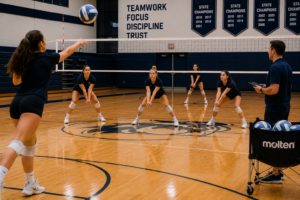
This drill helps coaches evaluate your ability to handle serves consistently and start your team’s offense with a quality first pass. Since serve receive is one of the most important skills in volleyball, coaches look for players who can remain composed, communicate effectively and deliver accurate passes under pressure.
- Begin in a balanced ready position with your knees bent, shoulders forward and your weight on the balls of your feet. As the server contacts the ball, track its flight early and move your feet into position instead of reaching with your arms. Creating a stable platform with your forearms will help you direct the ball toward the setter or designated target.
- Focus on controlling the ball rather than trying to force a perfect pass every time. Staying balanced and using your legs to guide the ball will improve your consistency against serves with different speeds, heights, and spin. The ability to adjust quickly is something coaches value during tryouts.
- Communication is equally important during a serve receive drill. Call the ball confidently, avoid hesitation and work together with your teammates to prevent confusion. Clear communication demonstrates teamwork and court awareness.
- Finally, maintain your focus throughout the drill. A single poor pass shouldn’t affect your confidence or effort. Coaches appreciate players who recover quickly, remain positive and continue making smart decisions. Consistent serve receive, sound technique and effective communication can leave a lasting impression.
Movement and Agility Drill
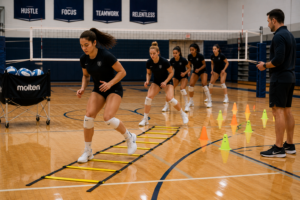
It helps coaches evaluate your speed, balance, coordination and ability to change direction efficiently. Volleyball is a fast-paced sport, so players must be able to move quickly while maintaining control and proper body positioning throughout every rally.
- Start in a balanced athletic stance with your knees bent and your weight on the balls of your feet. Stay light on your feet and use quick, controlled movements as you shuffle, sprint, backpedal or change direction. Avoid crossing your feet unnecessarily, as this can reduce your balance and slow your reaction time.
- Throughout the drill, focus on maintaining good posture and staying under control rather than simply moving as fast as possible. Efficient footwork allows you to reach the ball sooner and transition smoothly between offensive and defensive plays. Coaches often look for players who move with purpose instead of moving frantically.
- Keep your eyes up and remain aware of your surroundings during each repetition. Strong court awareness, combined with quick reactions, demonstrates that you can anticipate the next play instead of simply reacting to it.
- Just as importantly, maintain your energy and effort from the beginning of the drill to the end. Coaches appreciate players who hustle on every repetition, recover quickly after each movement and remain focused even when fatigue begins to set in. Excellent movement, balanced footwork and relentless effort will make a pretty good impression.
Communication Drill
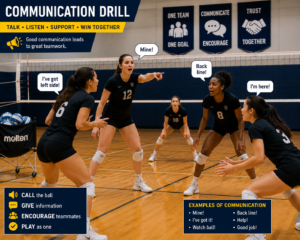
A communication drill helps coaches evaluate how well you interact with teammates before, during and after each play. Volleyball is a team sport, and effective communication reduces confusion, builds trust and helps the team perform more efficiently.
Coaches value players who communicate consistently, regardless of their position on the court.
- During the drill, call the ball early and loudly using clear, confident language. Let your teammates know if you’re taking the ball, need help or are directing the next play. Speaking up at the right time prevents hesitation and demonstrates leadership, awareness and confidence.
- Communication goes beyond calling the ball. Encourage your teammates, share helpful information and stay engaged throughout every rally. Positive communication helps maintain team morale and shows coaches that you can contribute to a supportive team environment.
- Remember that good communication should be paired with active movement and attention to the play. Listen carefully to your teammates, respond quickly and adjust your positioning when necessary. Demonstrating both verbal and non-verbal communication, such as making eye contact or using hand signals when appropriate, reflects strong court awareness.
- Most importantly, communicate consistently from the first drill to the last. Coaches notice players who remain vocal, supportive and focused, even after mistakes or challenging plays. Clear communication, teamwork and a positive attitude are qualities that will help you stand out.
FAQs on Volleyball Tryout Drills You Must Know
How Often should You Practice Volleyball Tryout Drills Before Tryouts?
Practicing volleyball tryout drills 2 to 4 times per week is a good starting point, depending on your schedule and experience level. Focus on quality repetitions instead of long training sessions.
Consistent practice helps improve muscle memory, confidence and overall performance when tryout day arrives.
What should You Bring to Volleyball Tryouts Besides Your Equipment?
In addition to your volleyball gear, bring a water bottle, healthy snacks, a small towel and any required documents. Arriving early, staying hydrated and being mentally prepared will help you stay focused and perform your best throughout the tryout session.
What if You Make Mistakes During Volleyball Tryouts?
Making mistakes is a normal part of any tryout. Coaches often pay more attention to how you respond than the mistake itself.
Stay positive, listen to feedback, continue giving your best effort and demonstrate good sportsmanship and coachability throughout every drill.
Conclusion
Getting good at the important volleyball tryout drills gives you the confidence to perform them efficiently on the day. It also gives you an opportunity to stand out from the rest and increase your chances of making the team.
I am sure that by now, you have a thorough idea on the top volleyball tryout drills and how to perform them during the day of the tryout.
It’s your turn!
What are your thoughts about this guide?
Would you like to add any tip that helped you perform the tryout drills to the best of your abilities during the session?
Kindly share them in the comments section below!
Related Posts
Here’s Everything Players Need to Know About the Types of Hits in Volleyball
Types of Volleyball Balls: Here’s What Players Need to Know!
Top Volleyball Faults and Violations Players Need to Avoid
LET’S BE SOCIAL!

That passing drill section nailed something I don’t see mentioned enough—footwork mattering more than arm technique. So many players (myself included, back in the day) try to fix a bad pass by reaching or swinging harder, when 90% of the time the real fix is just getting your feet moving a half-second earlier.
Hi Trish, thank you very much for sharing your honest thoughts. I totally agree with your last point.
Great post! I know a few of my students who would love to read this blog.
Hi JRC, so very glad to hear that!
This is alot to know to be a volleyball player. You’re a resource others can come to.
Hi Mary Ann, thank you very much!
I remember our coach being very particular about our movement and agility during training. Thanks for sharing these tips on how to perform the drill properly. It’s a great reminder that good footwork and technique really make a difference.
Hi Clarice, pretty glad to know that you got an awesome coach and you played volleyball. I totally agree with your last point!
Very informative! Thanks for sharing.
Hi Sami, so glad to hear that!
I do think that having a bunch of drills to practice will make players so much better at volleyball tryouts! Thank you for these breakdowns of each one.
Hi Jupiter Hadley, I totally agree with your first point and so glad to hear that you found this post helpful for volleyball players.
These are amazing and very insightful. Thanks a lot. I love that serious players who are interested in tryouts can practice and perfect these drills.
Hi Karen, so glad to hear that!
I didn’t realise there were so many drills, never mind to need to know for tryouts. Impressive to retain all of those skills x
Hi Rhian, glad to know that you’ve learned something new about volleyball from this post.
I can see why these tryout drills are so important at creating situations and seeing how the player responds to them. It will give the coach a good all-round picture of what type of player you are.
Hi Yeah Lifestyle, you are exactly right!
Great tips! I really like how you explained each drill and what coaches are looking for. This is a helpful guide for any player preparing for volleyball tryouts.
Hi Lisa, thank you so very much!
This is such a great resource. Mastering those drills can really give players a leg up. any volleyball player needs to bookmark this one.
Hi Beth, thank you so much!