This is What You Need to Know About the Passing Drills in Volleyball
Believe in yourself, and you’ll conquer it all.
An inspirational quote for volleyball players
Source: Strength and Power for Volleyball.
Wonder of Volleyball is reader supported. Some of the links contained in this post are affiliate links. If you click and purchase through those links, we’ll get a commission at no additional cost to you. Read our full disclaimer here.
Thanks in advance for supporting our work!
Are you looking for passing drills in volleyball that helps you get good at passing?
Do you want to clearly understand how to effectively practice each drill to master passing?
Then you are in the right place!
You already know that passing is one of the essential skills in volleyball and getting good at it will be valuable for you throughout your playing journey.
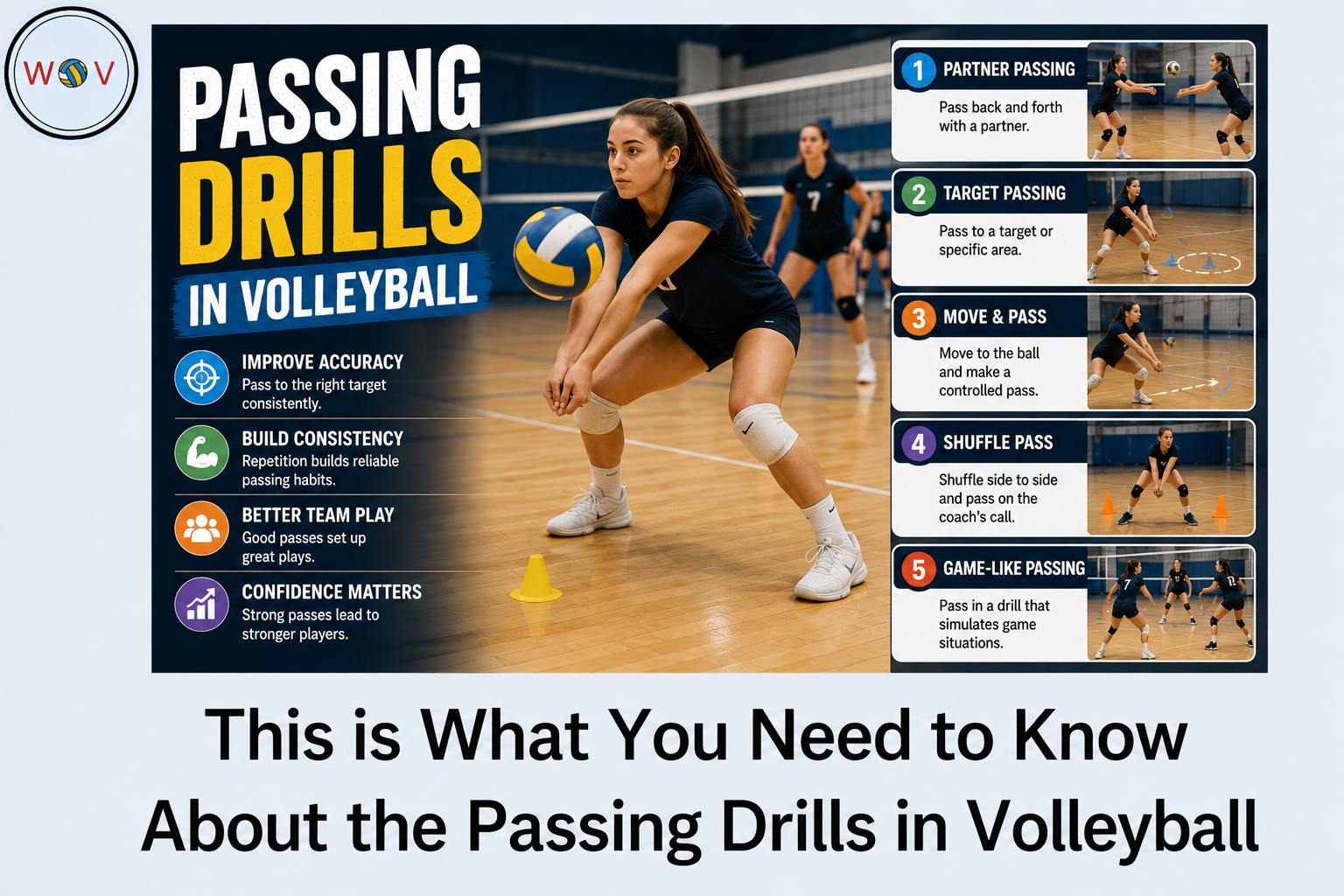
In this post, we’ll take a closer look at the various passing drills in volleyball, how to practice these drills to master passing and much more.
Let’s get started!
Did you know that during a typical passing drill, the actual ball contact lasts only a fraction of a second? Most of a passer’s effort is spent reading the ball’s trajectory, adjusting footwork and getting into the correct position before contact occurs.
All About the Passing Drills in Volleyball
Why Passing Drills Are Important in Volleyball
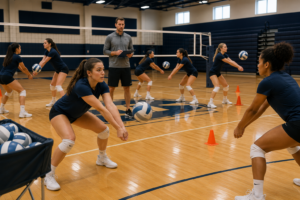
Passing drills are one of the most effective ways to build a strong foundation in volleyball. Every rally begins with a quality first touch, and consistent passing gives your team a better chance to run an organized offense.
Whether you’re a beginner player learning the basics or an experienced player refining your skills, regular passing drills help improve your overall performance on the court.
These drills develop essential skills such as ball control, accuracy, footwork, balance and communication. Repeating the same movements in a structured practice environment helps players build muscle memory, making it easier to react confidently during fast-paced matches.
Over time, passing becomes more natural, allowing players to focus on reading the play instead of thinking about every movement.
Passing drills also encourage teamwork. Many drills require players to communicate, move into position and work together to keep the ball under control.
As a result, teammates learn to trust one another and become more effective during serve receive and defensive situations of a match.
Another advantage of passing drills is that they can be adjusted to suit any skill level. Beginners can start with simple partner or wall drills, while advanced players can practice actual match-like scenarios that challenge their decision-making and consistency. By practicing passing drills regularly, players strengthen one of volleyball’s most important skills and become more reliable for their team.
Forearm Passing Drill
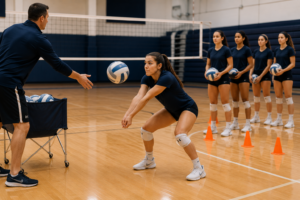
The forearm passing drill is one of the most fundamental drills in volleyball because it helps players develop the consistency needed for accurate first touches. Since forearm passing is commonly used to receive serves and defend attacks, practicing this drill regularly builds confidence and improves overall ball control.
- To perform this drill, begin in an athletic stance with your knees bent, feet shoulder-width apart and your weight balanced on the balls of your feet. Form a solid passing platform by placing one hand inside the other and keeping your elbows straight.
- Have a partner toss or lightly hit the ball toward you, then use your legs to guide the ball back to a designated target rather than swinging your arms excessively. Focus on keeping your platform angled correctly and making clean, controlled contact with the ball.
- As your consistency improves, increase the difficulty by having your partner vary the height, speed or direction of each pass. This encourages quicker footwork and teaches you to move into position before making contact.
- You can also set goals, such as completing a certain number of accurate passes in a row, to improve concentration and consistency.
- Practicing the forearm passing drill regularly helps players develop better technique, sharper movement and greater confidence. Over time, these improvements translate into more accurate serve receives and defensive passes, giving your team a stronger opportunity to build successful attacks.
Wall Passing Drill
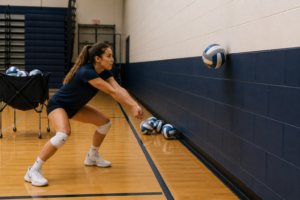
The wall passing drill is an excellent way to improve your passing skills without needing a partner. It provides continuous repetitions, allowing players to refine their technique, reaction time and ball control through consistent practice.
Because the wall returns the ball immediately, players must stay focused and ready for the next contact.
- Stand a few feet away from a sturdy wall in an athletic stance with your knees slightly bent. Form a firm passing platform by locking your elbows and keeping your hands together.
- Pass the ball against the wall using your forearms, aiming for a consistent target area. As the ball rebounds, move your feet quickly to get into position and repeat the pass. Concentrate on maintaining proper platform angle, balanced body positioning and controlled contact instead of relying on arm swings.
- As you become more comfortable, challenge yourself by increasing the pace, stepping farther away from the wall or alternating between short and long passes. You can also set time-based or repetition-based goals to improve your consistency and endurance while maintaining proper technique.
- One of the greatest benefits of the wall passing drill is the instant feedback it provides. A well-executed pass usually rebounds in a predictable path, while an inaccurate pass quickly reveals mistakes in platform angle or body position.
Practicing this drill regularly will help players to develop better ball control, quicker footwork and greater passing consistency, making them more dependable during serve receive and defensive situations.
Partner Passing Drill
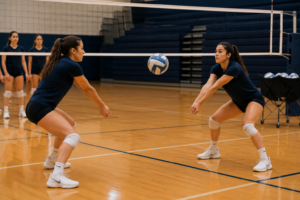
This is one of the simplest and most effective drills to improve passing accuracy, consistency and communication. Unlike wall drills, practicing with a partner introduces movement and timing, making the drill more like an actual match while helping players develop trust and coordination with a teammate.
- Stand several feet apart in an athletic stance with your knees bent and shoulders facing your partner. One player starts by tossing or passing the ball, while the other uses a controlled forearm pass to return it.
- Focus on creating a stable platform, moving your feet into position and directing the ball accurately toward your partner’s chest or target area. After each pass, reset your stance and stay prepared for the next contact.
- As both players become more consistent, gradually increase the distance between you or vary the speed and direction of the passes. You can also add movement by having each player shuffle left or right before making contact.
- These adjustments improve footwork, reaction time and the ability to pass accurately while on the move.
- The partner passing drill also reinforces the importance of communication. Calling for the ball and encouraging one another helps create habits that carry over into competitive matches.
- If you regularly practice this drill, you can develop greater control, consistency and confidence, making you more reliable during serve receive, defensive plays and extended rallies.
Must’ve Gear for Volleyball Players
Triangle Passing Drill
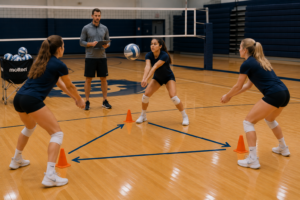
This particular drill is important for improving passing accuracy, movement and communication while working with teammates. Unlike partner passing, this drill requires players to react to passes coming from different angles, making it more representative of real match situations.
It also encourages players to stay alert and maintain proper positioning throughout the drill.
- To perform this drill effectively, three players form a triangle, standing several feet apart. One player begins by passing the ball to a teammate using a controlled forearm pass. The receiving player then passes to the third player, and the sequence continues around the triangle.
- Throughout the drill, players should remain in an athletic stance, move their feet quickly to get behind the ball and focus on directing each pass accurately to their teammate.
- Once the basic drill becomes comfortable, increase the challenge by changing the passing direction, increasing the pace or having players move after each pass to create new passing angles.
- Coaches may also introduce match-like passing variations by mixing in short, deep or off-target passes that require players to adjust their positioning before making contact.
- The triangle passing drill develops much more than passing technique. It improves court awareness, communication, footwork and decision-making while reinforcing the importance of delivering accurate first touches.
- As players consistently practice this drill, they become more confident handling the ball under pressure and better prepared for the fast-paced movements and teamwork required during competitive matches.
Serve Receive Passing Drill
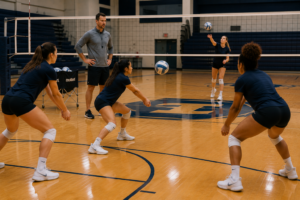
It is designed to help players handle one of the most important moments in volleyball, the opponent’s serve. A successful serve receive creates the opportunity for an effective offensive play, making this drill essential for improving first-ball contact, positioning and communication under match-like conditions.
- Position one or more passers on the receiving side of the court while a server delivers the ball from the opposite end. The objective is to pass the serve accurately to a designated target, typically the setter’s position near the net.
- Players should begin in an athletic stance, read the server’s movements, move their feet quickly and maintain a stable passing platform to control the ball.
- As players become more comfortable, coaches may increase the difficulty by varying the server’s speed, placement and type of serve. This encourages players to react to different situations and make controlled passes even when the serve is challenging.
- Coaches will also rotate players through different serve receive positions so they gain experience covering various areas of the court.
- The serve receive passing drill not only improves passing accuracy but also strengthens communication and decision-making among teammates. Calling for the ball, understanding court responsibilities and maintaining composure under pressure are all important habits developed through this drill.
- Players become more reliable in starting offensive plays and helping their team maintain control throughout the match if they are good at serve receiving.
How to Get the Most Out of Passing Drills
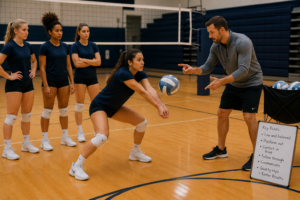
- Passing drills are most effective when they are practiced with purpose and consistency. Simply repeating a drill isn’t enough. Players should focus on performing each repetition with proper technique, controlled movements and full concentration.
- Prioritizing quality over quantity leads to better habits that carry over into competitive matches.
- Start each drill in a balanced athletic stance and make it a habit to move your feet before contacting the ball. Maintaining a firm passing platform and directing the ball toward a specific target will help improve accuracy and consistency.
- If mistakes happen, view them as opportunities to identify areas for improvement rather than becoming frustrated.
- As your skills develop, gradually increase the difficulty of your drills. You can add movement, increase the pace, reduce reaction time or practice under actual match-like conditions to challenge yourself.
- These variations help prepare you for the unpredictable situations you’ll encounter during matches.
- Communication is another important part of effective passing. When working with teammates, call for the ball, encourage one another and provide constructive feedback.
- Strong communication builds trust and improves teamwork, both of which are essential for successful passing.
- Finally, make passing drills a regular part of your training routine. Consistent practice over time develops better ball control, quicker reactions and greater confidence on the court.
FAQs on Passing Drills in Volleyball
How Often Should You Practice Passing Drills in Volleyball?
Practicing passing drills two to four times per week is ideal for most players. Consistent practice helps improve ball control, footwork and accuracy.
Even short, focused sessions will lead to noticeable improvements when performed regularly with proper technique.
Can Beginner Players Practice Passing Drills Without a Coach?
Yes. Many passing drills, such as wall passing and basic partner passing, can be practiced without a coach. Beginner players should focus on using correct technique and gradually increase the difficulty as their confidence and consistency improve.
What is the Biggest Mistake Players Make During Passing Drills?
One common mistake is relying on arm swings instead of using the legs and maintaining a stable passing platform. Players also tend to neglect footwork, making it harder to get behind the ball and deliver accurate, controlled passes.
Conclusion
No doubt that passing is one of the critical skills in volleyball and mastering it will make you a valuable member of your team.
I am confident that by now, you’ll have a thorough idea on some of the passing drills in volleyball and how each drill effectively helps you get good at this skill.
It’s your turn now!
What are your thoughts about this guide?
Which are the drills helped you master passing?
Share them away in the comments section below!
Related Posts
How to Pass in Volleyball? Here’s What You Need to Know!
How to Properly Dive in Volleyball? A Detailed Guide
Volleyball Positions Explained: Here’s What You Need to Know!
LET’S BE SOCIAL!

I had no idea what passing drill. This is a very informative post on volleyball game
Hi Khushboo, thanks!
I always learn so much from visiting your site. Thanks for helping me understand more about passing drills.
Hi Jenny, thank you very much and so glad to hear that!
I feel that if you are serious about volleyball, you really do need to make sure that you are practising! This is such a good breakdown on how to do passing drills.
Hi Jupiter Hadley, I completely agree with your first point and thank you very much.
This brings back memories! I remember doing a lot of wall passing drills when I attended a volleyball summer clinic. It’s such a simple exercise, but it’s really effective for improving your passing, even without a partner. Our coaches also encouraged us to keep practicing at home, and it definitely helped build consistency. Thanks for sharing these great tips!
Hi Clarice, so glad to read that you attended a summer clinic and you are aware of the wall passing drill. Thank you so much for your kind words!
These drills look so helpful for improving passing skills! 🏐 Great tips for anyone wanting to level up their game 🙌
Hi Giangi Townsend, thank you so verry much!
Knowing about these drills will certainly make playing a game of Volleyball much easier and help build confidence in game play
Hi Samantha Donnelly, totally agree!
Great instructions for those wanting to perfect their passing skills. Fundamentals are the backbone of any sport.
Hi Tammy, thank you very much and completely agree with your last point.
I feel like mastering these passing drills is a key building block of becoming a successful volleyball player. You really need to nail down those basics.
Hi Beth, I totally agree with your points!
As someone who has never played volleyball in her life I had no idea passing drills were even a thing. But it makes sense to be able to pass between your own players x
Hi Rhian, glad to know that you learned something new about volleyball from this post.
This is very helpful and as a volleyball enthusiast, i find this very interesting. Thank you so much for sharing your amazing knowledge with the rest of us. The one on one passing drills are very helpful.
Hi Karen, so glad to read that!
I can absolutely see how these drills would build confidence and skills in passing through out the whole team. A very important part of training!
Hi Yeah Lifestyle, totally agree with your points!
These passing drills are great for building strong volleyball fundamentals. I love how each drill improves control and teamwork.
Hi Marie Cris Angeles, thank you so much! Completely agree with your first point!