
Types of Blocks in Volleyball: A Complete Guide
The best thing we can do is take care of the things we have control of and not be concerned with things we can’t. We can control our standard of training, preparation and commitment to executing our system at a high level each time we take the floor.
Alan Knipe
Source: Flo Volleyball.
Wonder of Volleyball is reader supported. Some of the links contained in this post are affiliate links. If you click and purchase through those links, we’ll get a commission at no additional cost to you. Read our full disclaimer here.
Thanks in advance for supporting our work!
What are the types of blocks in volleyball that are performed during a match?
Why blockers should know each type of block and how they can be useful for them throughout their playing journey?
Read till the end to know everything!
Blocking is essential in volleyball and a must have defensive skill for every front-row player.
In this post, we’ll have a thorough look at the types of blocks in volleyball and how each one can be useful for players throughout their playing journey.
Let’s get started!
Did you know that blockers often help their team even without touching the ball? A well-positioned block can force the hitter to change direction or hit around the hands, making the attack much easier for defenders behind the block to read.
Types of Blocks in Volleyball
The Role of Blocking in Volleyball
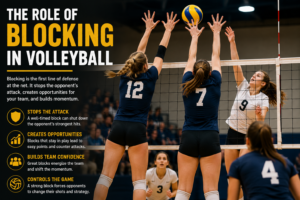
Blocking plays a major role in volleyball and it is the first line of defense against an opponent’s attack at the net. A well-timed block can immediately stop a spike, slow down the ball or force the opposing hitter to change their attacking direction.
This helps the defensive players behind the blockers react more effectively and stay prepared for the next touch.
In addition to defense, blocking also creates pressure on the opposing team. Strong blockers can make hitters hesitate, avoid certain angles and attempt more difficult shots.
This will obviously lead to attacking errors and reduce the opponent’s offensive confidence during important moments of the match.
Good blocking requires more than just jumping high. Players must read the setter, anticipate the hitter’s intentions, position themselves correctly and coordinate with teammates at the net. Communication is especially important when forming double or triple blocks, since players must move together to close gaps and limit scoring opportunities.
Blocking will also shift momentum within a match. A successful block often energizes the team, excites the crowd and boosts overall confidence on the court.
Whether it results in a direct point or simply disrupts the opponent’s offense, blocking remains one of the most valuable defensive skills in volleyball.
Single Blocks and When to Use Them
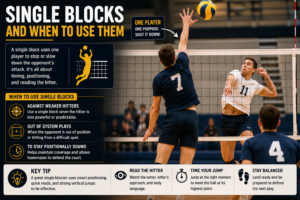
- A single block in volleyball occurs when one player attempts to stop or slow down an opponent’s attack at the net without assistance from another blocker. This type of block is commonly used when the attacking play develops too quickly for teammates to join, or when the opponent’s hitter is attacking from an area that is difficult to cover with multiple blockers.
- Single blocks are often seen against quick sets, fast-tempo offenses, back-row attacks or unexpected plays where there is limited time to form a double block. Middle blockers may also use single blocks when trying to react quickly to a setter dump or a rapid attack through the center of the court.
- Although single blocks cover less space than double or triple blocks, they still play an important defensive role. A properly timed single block will force hitters to change their shot direction, reduce the power of the attack or create easier defensive opportunities for teammates positioned behind the blocker.
- To perform an effective single block, players must focus on timing, footwork, body positioning and reading the hitter’s approach. Jumping too early or leaving gaps between the blocker’s arms can make it easier for attackers to score. Players should aim to press their hands over the net while staying balanced and ready to react.
- Single blocking also requires confidence and quick decision-making. Even when it does not result in a direct point, a strong single block can disrupt the rhythm of the opposing offense and help the defensive system stay organized throughout the rally.
Double Blocks: Strengthening Defense at the Net
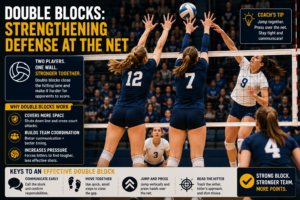
A double block takes place when two front-row players work together at the net to defend against an opponent’s attack. This is one of the most common blocking strategies used in competitive volleyball because it provides stronger coverage and makes it more difficult for hitters to find open attacking angles.
- Double blocks are usually formed against outside hitters, powerful attackers and predictable offensive plays. In many situations, the middle blocker quickly moves to join the outside or right-side blocker in order to close the space above the net. When executed correctly, the two blockers create a larger defensive wall that can directly stop spikes or force weaker attacking shots.
- Communication and teamwork are extremely important when forming a double block. Both players must move together, time their jump correctly and position their hands properly to avoid leaving gaps between them. Even a small opening can allow the ball to pass through the block and create scoring opportunities for the opponent.
- Footwork also plays a major role in successful double blocking. Players often use shuffle steps or crossover movements to quickly reach the correct blocking position before the hitter contacts the ball.
- Reading the setter and anticipating the direction of the attack will help blockers react faster and improve their overall effectiveness.
- Along with stopping attacks, double blocks help organize the team’s entire defensive system. Back-row defenders can position themselves more confidently when they know the blockers are taking away certain hitting angles. Because of this, double blocking remains one of the most effective ways to strengthen team defense and apply pressure at the net throughout a match.
Triple Blocks and How Teams Use Them Against Strong Hitters
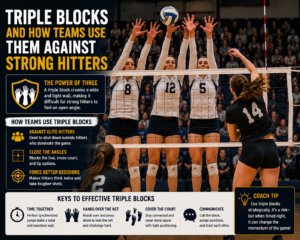
A triple block in volleyball occurs when three front-row players work together at the net to stop a powerful or highly effective attacker. This type of block creates the largest possible defensive wall and is mainly used against dominant hitters who consistently score through single or double blocks.
- Teams usually form triple blocks against strong outside hitters, opposite hitters and players who receive a large number of attack attempts during a match. By bringing three blockers together, teams can cover more space above the net and limit the hitter’s available attacking angles. This often forces the attacker to attempt riskier shots or tip the ball instead of hitting with full power.
- Triple blocks require excellent teamwork, timing and communication. All three blockers must move quickly into position, jump together and seal the spaces between their hands and arms. If one player is late or leaves a gap, skilled hitters can still attack through the block or target uncovered areas of the court.
- Although triple blocking can be very effective, it also comes with certain risks. Since three players commit to the net, fewer defenders remain available to cover tips, soft shots, or attacks directed to open spaces in the backcourt. Because of this, teams must carefully decide when using a triple block is necessary.
- Coaches often use triple blocks in critical match situations against the opponent’s strongest offensive player. When executed properly, a triple block can completely disrupt an attacker’s rhythm, create direct scoring opportunities, and give the defending team a major psychological advantage during important rallies.
The Use of Swing Blocking in Modern Volleyball
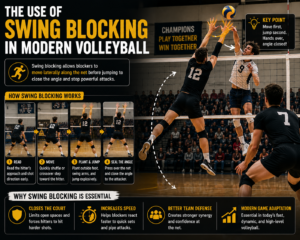
- Swing blocking is a modern blocking technique in volleyball that uses an attacking-style arm movement to help blockers move faster and jump more explosively at the net. Instead of keeping their hands high throughout the movement, players swing their arms backward and then forward during the jump to generate additional momentum and improve lateral movement along the net.
- This technique is widely used in modern competitive volleyball because the speed of offenses requires blockers to cover large areas quickly. Middle blockers especially benefit from swing blocking since they often need to move rapidly from one side of the court to the other in order to form double blocks against fast attacks.
- One of the biggest advantages of swing blocking is improved mobility. The arm swing helps players transition more efficiently, reach greater jumping height over the net and arrive in better position against quick-tempo offenses. This allows teams to respond more effectively to fast setters and athletic hitters.
- However, swing blocking also requires strong timing, coordination and body control. If a blocker mistimes the movement or loses balance during the approach, it can create gaps in the block or delay their jump. Proper footwork and reading the setter are still essential for success.
- Many coaches teach swing blocking because it fits the faster pace of today’s volleyball matches. When performed correctly, it helps blockers move more dynamically, close blocking gaps more efficiently and strengthen the team’s overall defense at the net. As offenses continue to become quicker and more aggressive, swing blocking remains an important technique in modern volleyball.
Soft Block and Controlled Defensive Touches
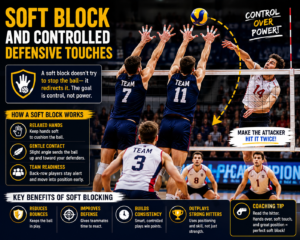
- Soft block is a defensive blocking technique where players focus on controlling the ball instead of trying to score directly with a powerful block. Rather than aggressively pushing the ball straight down into the opponent’s court, blockers use softer hand contact to slow the attack and guide the ball toward their teammates for easier defensive plays.
- This type of block is especially useful against hard hitters and fast attacks. By absorbing some of the power from the spike, blockers can keep the ball playable and allow the back-row defenders to react more effectively. Soft blocks often create controlled touches that improve the team’s chances of transitioning from defense into offense.
- Good hand positioning is very important when performing a soft block. Players must keep their hands strong but relaxed enough to cushion the ball instead of deflecting it unpredictably. Timing, balance and reading the attacker also help blockers direct the ball into favorable defensive areas on the court.
- Soft blocking is commonly used when a blocker is slightly out of position or facing an attacker with significant hitting power. In these situations, controlling the ball can be more valuable than attempting an aggressive block that may result in the ball deflecting out of bounds.
- Modern volleyball teams often combine soft blocking with organized backcourt defense. This strategy helps reduce the speed of the attack while giving defenders more time to cover the court. Although soft blocks may not always produce direct points, they are extremely valuable for extending rallies, maintaining defensive stability and creating opportunities for counterattacks.
Common Blocking Mistakes Volleyball Players Should Avoid
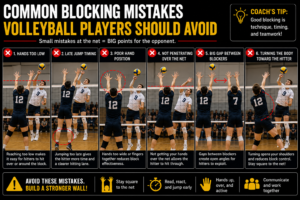
Blocking can be one of the most effective defensive skills in volleyball, but several common mistakes can reduce a player’s effectiveness at the net.
- One of the biggest mistakes is jumping too early or too late. Poor timing makes it difficult to stop the attack and often creates open spaces for hitters to target.
- Another common problem is failing to position the hands correctly over the net. Some players keep their hands too low or allow gaps between their arms, making it easier for the ball to pass through the block. Strong hand positioning and pressing over the net help create a more effective blocking wall.
- Poor footwork is also a major issue for many blockers. Slow movement along the net can prevent players from forming proper double or triple blocks in time. Using controlled shuffle steps or crossover movements can improve speed and positioning against fast offenses.
- Many players also focus only on the ball instead of reading the setter and hitter. Successful blockers must anticipate the play by observing the setter’s body position, the hitter’s approach and the direction of the attack. Reacting too late often leads to ineffective blocks.
- Lack of communication between teammates can create confusion at the net as well. Blockers must work together to close gaps, call clearly and coordinate defensive coverage behind the block.
- Finally, some players become too aggressive and try to block every attack directly for a point. In many situations, controlling the ball with a soft block is the smarter choice.
Avoiding these common mistakes can help volleyball players become more consistent, disciplined and reliable blockers during matches.
FAQs on Types of Blocks in Volleyball
Which Volleyball Position is Usually Responsible for Blocking the Most?
Middle blockers are usually responsible for blocking the most because they must react quickly to attacks from multiple areas and angles of the court. They often move along the net to assist teammates in forming double or triple blocks against opposing hitters.
Why is Timing Important when Blocking in Volleyball?
Timing is important because blockers must jump at the correct moment to meet the ball above the net. Jumping too early or too late can create openings for attackers and reduce the effectiveness of the block during rallies.
Can Shorter Players Still Become Effective Blockers?
Yes. Shorter players can still become effective blockers by improving their timing, footwork, positioning and the ability to read the setters in their opponent team. Strong technique and quick reactions often help players compensate for differences in height at the net.
Although this is the case, taller players definitely have an advantage in blocking and they are preferred by most coaches to position towards the net area of the court.
Conclusion
A powerful and efficient block will change the whole momentum of a set and thereby, changing the entire state of the match.
I am sure that through this detailed guide, you have a clear idea on the types of blocks in volleyball and how each one will be useful for volleyball players.
It’s your turn now!
What are your thoughts about this guide?
Would you like to add any tip that helped you get good at the various types of blocks in volleyball?
Please share them in the comments section below!
Related Posts
Blocking in Volleyball: Here’s Everything You Need to Know!
A Beginner Friendly Guide to Hitting in Volleyball
How to Set in Volleyball? Crucial Tips and Techniques you must know!
LET’S BE SOCIAL!

Great breakdown of the different types of volleyball blocks! I like how you explained when each technique is most effective—it makes the strategy behind blocking much easier to understand. Thanks for putting together such a helpful guide for players and fans alike!
Hi Gina P, super glad to read that!
Excellent breakdown of volleyball blocking techniques! I especially found the section on swing blocking interesting, as it really shows how the sport continues to evolve with faster-paced offenses. The reminders about timing, footwork, and communication are valuable for players at any level.
Hi Lisa, thank you so very much! Glad to know that you found this post helpful.
Thanks for your explanation the role of the blocker. You explained it very well!
Hi Dusty, thank you so much! Glad to know that you learned something new about volleyball from this post.
Very informative. Different types of blocks – didn’t know there different ones. It makes sense. I don’t know alot about volleyball but I do notice people do different moves. Thanks.
Hi Mary Ann, so glad to know that you learned something new about volleyball from this post.
It is so interesting to learn more about the role of blocking in volleyball. Thanks for sharing your knowledge.
Hi Jenny, glad to know that you’ve learned something new about volleyball from this post.
These are great tips and can definitely be a game changer! Enjoyed reading this.
Hi Rita, thank you so very much!
This makes me wanna play volleyball this summer again!
Hi Lex, very happy to know that! All the best!
I’ve learned a lot from this guide! I never realized there were so many different blocking techniques in volleyball. The breakdown of single, double, and triple blocks was especially helpful and really shows how much strategy goes into the game.
Hi Lisa, thank you very much. So glad to know that you’ve learned something new about blocking from this post.
This is such an incredible resource for volleyball players and I especially love this post! This is perfect for beginners and beyond too and appreciate you sharing!
Hi Melissa Cushing, thank you so very much!
I did not know there were different types of blocking in volleyball! This really gives great depth when watching people play the sport.
Hi Jupiter Hadley, thank you so much. Very glad to know that you’ve learned something new about volleyball from this post.
Really helpful. Timing is important in every game.
Hi Moni Lodha, thank you very much and I totally agree with your last point.
Ok now this is so new to me and did not know there were different ones , I think I am slowly becoming less of a novice with your tips though 🙂
Hi Kira, thank you very much!
I had no idea there were so many different types of blocks in volleyball! This was really interesting to read and does a great job explaining how each blocking technique plays an important role in both defense and overall team strategy.
Hi Lisa, thank you so very much!
I didn’t realise there were so many different ways to block whilst playing volleyball. This is a great breakdown of all the different techniques.
Hi Claire Chircop, thank you very much and so glad to know that you’ve learned something new about blocking from this post.
I didn’t even realise blocking was a thing in volleyball, never mind multiple different versions. Thanks for sharing, I always learn something new x
Hi Rhian Scammell, so glad to know that you learned something new about volleyball from this post.
It sounds like the role of the blocker is so important in a volleyball game. It is great that you have so much knowledge of the sport to share with us.
Hi Yeah Lifestyle, so glad to know that you’ve learned something new about volleyball from this post.
This was very easy to understand and follow. The different block types were explained clearly for beginners.
Hi Marie Cris Angeles, thank you very much. So glad to know that you found this post helpful.
Volleyball is so much more intricate than those of us who don’t play realize. I always love reading these technical posts.
Hi Claudia, thank you so much!
These are always such interesting posts. I always thought blocks were just however you could get your hands up there. I had no clue!
Hi Beth, so glad to know that you learned something new about blocking in volleyball from this post.
Such an amazing sport, wow…The more I read about it, the more I want to start learning it more and more. Reading about the types of blocks is amazing, love it.
Hi Karen, thank you so much!