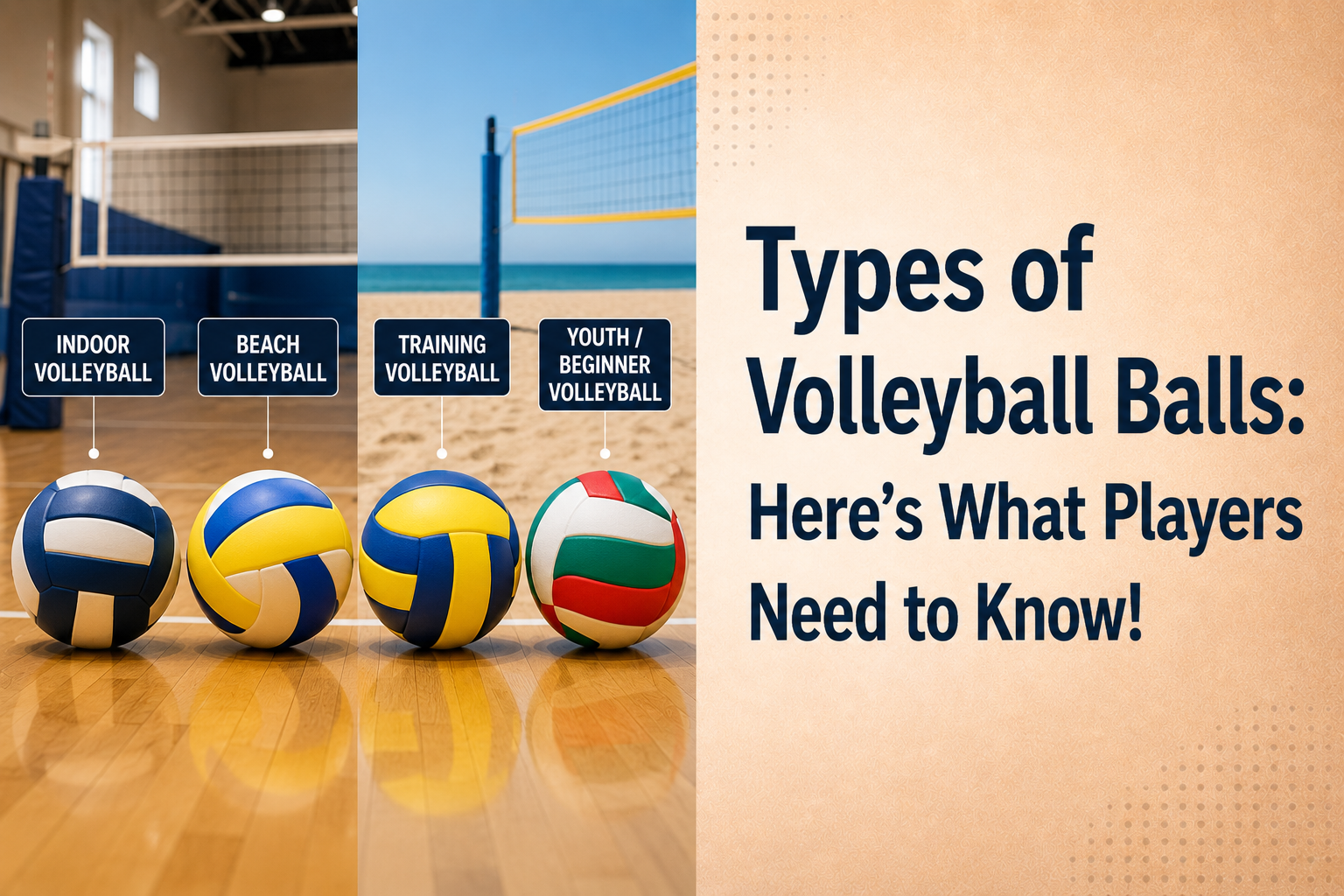
Types of Volleyball Balls: Here’s What Players Need to Know!
You learn you can do your best even when it’s hard, even when you’re tired and maybe hurting a little bit. It feels good to show some courage.
Joe Namath
Source: Hub Pages.
Wonder of Volleyball is reader supported. Some of the links contained in this post are affiliate links. If you click and purchase through those links, we’ll get a commission at no additional cost to you. Read our full disclaimer here.
Thanks in advance for supporting our work!
Have you ever wondered what types of volleyball balls used during matches?
How the overall design and texture of a volleyball is mainly influenced by the playing conditions of a match?
Stick around and read till the end to know all the details!
There are several types of volleyball balls used in professional matches according to the playing conditions.
In this post, we’ll take a closer look at what are the types of volleyball balls, how they vary depending on the match venue and how each type of ball will influence certain aspects of a match.
Let’s get started.
Did you know that manufacturers carefully design the panel texture and surface pattern of a volleyball to influence its flight? Small differences in texture can affect grip, control and even how much a serve moves in the air.
Everything About the Types of Volleyball Balls Players Need to Know
Indoor Volleyballs: The Standard Ball Used in Traditional Matches
Indoor volleyballs are the most commonly used balls in traditional volleyball matches played in indoor courts. They are specifically designed to provide players with consistent flight, control and responsiveness during rallies.
Most official indoor volleyballs feature a leather or synthetic leather cover with a smooth surface that allows for accurate passing, setting, serving and attacking.
Compared to beach volleyballs, indoor volleyballs are slightly smaller, heavier and firmer. These characteristics help them move quickly in the air and maintain a predictable trajectory during fast-paced play.
Their construction is intended to support the speed and precision required in competitive indoor volleyball matches.
Organizations that govern volleyball competitions typically establish standards for ball size, weight and pressure to ensure fairness and consistency across matches. As a result, players competing at school, club, collegiate or professional levels often use volleyballs that meet these official specifications.
Indoor volleyballs are available in a variety of quality levels, ranging from beginner-friendly training models to high-performance match balls used in competitive tournaments. While recreational players may not need a top-tier ball, choosing one designed for indoor play can significantly improve comfort, ball control and overall skill development.
Understanding the features of indoor volleyballs helps players select the right equipment and better prepare for the demands of traditional volleyball competitions.
Beach Volleyballs: Designed for Sand, Sun and Outdoor Play
Beach volleyballs are specifically designed for outdoor play on sand courts. While they may look similar to indoor volleyballs at first glance, they feature several important differences that help them perform effectively in outdoor conditions.
These volleyballs are built to withstand exposure to sunlight, wind, moisture and varying temperatures while maintaining consistency for continuous play.
One of the most noticeable differences is their size and feel. Beach volleyballs are generally slightly larger and softer than indoor volleyballs.
Their softer construction makes them more comfortable to handle during long rallies and reduces the impact on players’ arms and hands when playing barefoot on sand.
The outer cover of a beach volleyball is typically made from durable, water-resistant materials that can handle outdoor environments. In addition, beach volleyballs are often inflated to a lower pressure than indoor volleyballs, giving them a less rigid feel and a slower flight through the air.
This helps players maintain control despite challenging weather conditions such as wind.
Official beach volleyball competitions use balls that meet specific standards regarding size, weight and performance. However, recreational players can also find beach volleyballs designed for casual matches at parks, beaches and outdoor courts.
Knowing about the unique characteristics of beach volleyballs will help players choose the right ball for outdoor play and enjoy a more comfortable and consistent experience on the sand.
Must’ve Gear for Volleyball Players
Training Volleyballs and Their Role in Overall Skill Development
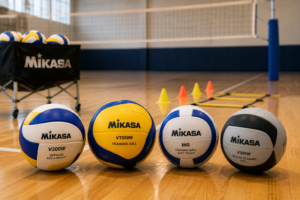
Training volleyballs are particularly designed to help players improve their skills through repetition, technique-focused drills and structured practice sessions. While they may resemble standard match volleyballs, some training balls feature unique characteristics that make them useful for developing specific aspects of a player’s game.
Depending on the training objective, coaches may use volleyballs that are slightly lighter, heavier, softer or designed with visual markings. Lighter balls can help beginner players build confidence and learn proper technique, while heavier balls may be used to strengthen arm movements and improve ball control.
Some training volleyballs also include colored panels or markings that help players track ball rotation and enhance their passing and serving accuracy.
Training volleyballs play an important role in developing fundamental skills such as serving, passing, setting, hitting and defensive techniques. Because practice often involves hundreds of repetitions, using the appropriate training ball can make learning more effective and help players develop correct habits over time.
These volleyballs are commonly used in schools, clubs, camps and individual training sessions. Coaches often select them based on the age, experience level and developmental needs of their players.
Although training volleyballs are valuable learning tools, they are typically used alongside standard match balls. This combination helps players refine their skills in practice while also becoming comfortable with the volleyballs they will encounter during actual matches.
Volleyballs for Youth and Beginner Players: Choosing the Right Ball for Learning the Sport
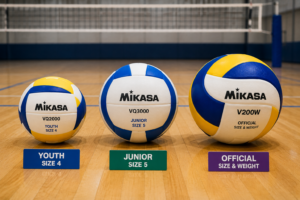
Selecting the right volleyball is an important step for youth and beginner players who are learning the fundamentals of volleyball. Using a ball that matches a player’s age, size and skill level will make the learning process more enjoyable while helping build confidence and proper techniques for various skills.
Many volleyballs designed for beginner players are lighter and softer than standard competition balls. These features reduce the impact on the arms and hands, making it easier for new players to practice passing, serving, setting, and other basic skills without discomfort.
A softer volleyball will also help beginners focus on techniques rather than worrying about the sting that sometimes comes from repeated ball contact.
Youth volleyball programs often use balls that are specifically manufactured for younger age groups. These volleyballs are intended to help players develop coordination, ball control and consistency as they progress through different stages of learning the sport.
As players become more experienced and physically stronger, they can gradually transition to regulation-size volleyballs used in competitive matches.
When choosing a volleyball for a beginner, factors such as comfort, durability and intended playing environment should be considered. A ball that is too heavy or difficult to control may slow skill development and reduce enjoyment of the sport.
By starting with an appropriate volleyball, young and beginner players can develop stronger fundamentals, gain confidence in their abilities and create a positive foundation for long-term growth in playing volleyball.
How to Select the Right Volleyball Based on Your Playing Environment?
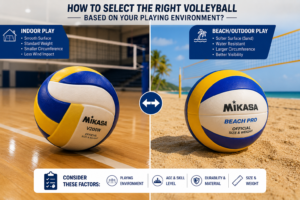
Choosing the right volleyball starts with understanding where you will be playing most often. Different playing environments place unique demands on the ball, so selecting one designed for those conditions can improve performance, comfort and durability.
For indoor courts, players should use volleyballs specifically designed for indoor play. These balls are typically firmer and built to provide consistent flight and precise control during fast-paced rallies.
If you primarily play in gyms, schools or sports halls, an indoor volleyball is usually the best option.
For outdoor sand courts and beach settings, beach volleyballs are the preferred choice. They are generally softer, slightly larger and constructed to withstand exposure to sunlight, wind and moisture.
Their design helps players maintain better control in outdoor conditions where weather can influence ball movement.
Players who are just beginning in the sport may benefit from lighter or softer volleyballs, especially during training sessions. These balls can make learning fundamental skills more comfortable and help build confidence while reducing the impact of repeated ball contact.
It is also important to consider factors such as age, skill level, frequency of play and intended use. A recreational player may prioritize comfort and durability, while a competitive athlete may prefer a volleyball that closely matches official match specifications.
When you select a volleyball that suits your playing environment and developmental needs, you will enjoy a better playing experience and maximize your progress as a volleyball player.
FAQs on Types of Volleyball Balls
How Long Does a Volleyball Typically Last?
The lifespan of a volleyball depends on its quality, frequency of use and playing conditions. A well-maintained volleyball used indoors may last several years, while balls frequently used outdoors may wear out faster due to exposure to sand, sunlight and moisture.
Can Weather Conditions Affect the Performance of a Volleyball?
Yes. Wind, heat, humidity and moisture can influence how a volleyball moves and feels during play. This is one reason beach volleyballs are designed differently from indoor volleyballs, as they are built to perform more consistently in outdoor environments.
What Signs Indicate that a Volleyball Should be Replaced?
A volleyball may need replacement if it loses its shape, struggles to maintain proper air pressure, develops surface cracks or shows excessive wear. Using a damaged volleyball can affect ball control, consistency and the overall playing experience.
Conclusion
From indoor/outdoor professional matches to youth volleyball and beginner players getting started in the sport, every competition uses a different ball that varies in size, air-pressure and the overall flight. Each one of these different types of volleyball balls provide fair chance for players of all levels to compete equally.
I am sure that through this guide, you have a clear idea on what are the different types of volleyball balls used during volleyball matches and how they provide players with sufficient opportunities to compete equally.
It’s your turn now!
What are your thoughts about this guide?
What you like about the types of volleyball balls used during matches?
Don’t forget to share your thoughts in the comments section below!
Related Posts
Basic Rules of Volleyball: A Complete Guide for Beginner Players
Top Volleyball Faults and Violations Players Need to Avoid
How to Play Volleyball as Beginner Players? Here’s What You Need to Know
LET’S BE SOCIAL!

I had no idea there were different balls. Your explanation makes perfect sense why there are though.
Hi Jenny, thank you very much and so glad to know that you learned something new about volleyball from this post.
This was very interesting. If I am being honest, I didn’t realise there was any differences in volleyball balls so I’ve learned something new today!
Hi Rebecca Smith, so glad to know that you learned something new about volleyball balls from this post.
Great post! I have to say, I’ve learned so much about volleyball from reading your blog. The information and insights you’ve shared have been incredibly enlightening, and there is so much about this sport that I never knew before.
Hi Lisa, thank you very much! So glad to hear that!
This is super cool. I had no idea there were different kinds of balls. I love your blog, and I don’t even play volleyball. It’s just so interesting to learn all this stuff!
Hi Ben, thank you very much! Super glad to hear that!
I did not realise about the different balls that are used. I love the breakdown from beach Volleyball to indoor Volleyball
Hi Samantha Donnelly, thank you very much! So glad to know that you learned something new about volleyball from this post.
I had no idea there were so many different types of volleyballs until I read this. I always thought a volleyball was just a volleyball, so it was interesting to learn how they’re designed for different styles of play. Thank you for sharing!
Hi Shakia, thank you very much! So glad to know that you learned something new about volleyball from this post.
I guess the variety of volleyballs work like soccer ball’s. Different ones for different purposes. Good to know. 🙂
Hi Mary Ann, I agree and so glad to know that you found this post relatable.
Great guide! I never realized there were so many different types of volleyballs designed for specific playing conditions and skill levels
Hi Lisa, thanks a lot!
Every time I come here, I learned something new. I had no idea that there was different kinds of volleyballs. For some reason, I thought there was only one.
Hi Andreia, so glad to hear that!
I had no idea there were so many kinds of volleyballs! This is a great guide!
Hi Heather, thank you very much. So glad to know that you learned something new about volleyball from this post.
Great guide for anyone new to volleyball! I like how it clearly explains the differences between indoor, beach, training, and youth volleyballs, making it much easier to understand which ball is best for different players and environments. A helpful resource for beginners and experienced players alike!
Hi Lisa, thank you so much! Glad to know that you found this post helpful for volleyball players.
I learn something new every time I read your blog posts! I had no idea there were different types of volleyballs – But reading it, it makes total sense! It’s gotten me thinking about other sports now too.
Hi Claire Mac, so glad to know that you learned something new about volleyball from this post.
Great guide to volleyballs. Now I know what I need to get!
Hi Marissa, thank you so much and so glad to know that. All the best!
I honestly didn’t realize that there was different types of volleyballs! Thank you for explaining them all so clearly.
Hi Jupiter Hadley, so glad to know that you learned something new about volleyball from this post.
I have 4 kids, so I always joke that I’ve got enough for a beach volleyball team. But I’ve honestly not really known much about volleyball or the intricacies of it. Some of my girls are really interested in the sport, so this was a useful read.
Hi Tiffany, thank you very much for your lovely and cheerful thoughts. I am so glad to know that your girls are interested in playing volleyball. Convey my best wishes to them!
This is soooo amazing wow…The more I read your posts the more the game grows on me. I had no idea there are different balls, wow…I love those details.
Hi Karen, thank you very much!
Super interesting. I love the breakdown of the different balls and how they’re different. I knew there were training and youth balls, but I didn’t know indoor and beach volleyballs were different.
Hi Beth, thank you so much. So glad to know that you found this post interesting and learned something new about volleyball.
Pardon my ignorance but I had never even thought about the fact that you could get different types of volley balls. I presumed that they were all the same! Very interesting!
Hi Yeah Lifestyle, so glad to know that you learned something new about volleyball from this post.
This was a very informative read! I never realized there were so many differences between indoor, beach, training, and youth volleyballs. It’s interesting how factors like size, weight, air pressure, and playing environment can affect performance and skill development.
Hi Lisa, thank you very much! So glad to know that you learned something new about volleyball from this post.
Great information about different types of volleyball balls.
Hi Moni Lodha, thank you very much!