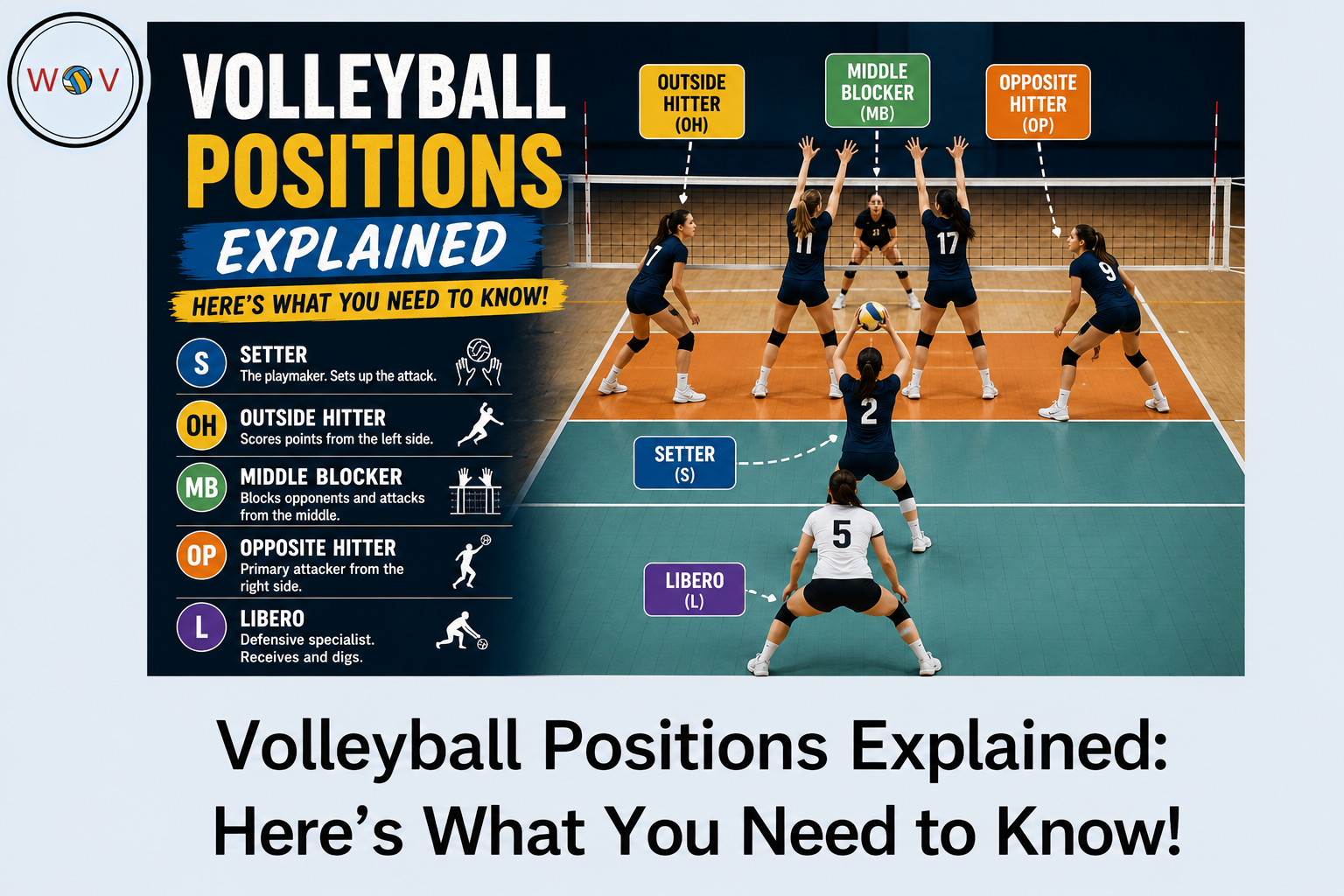
Volleyball Positions Explained: Here’s What You Need to Know!
Competition is key to developing players. The only practice environment in which you truly develop a player is a competitive arena.
Michael Lewis
Source: Gold Medal Squared.
Wonder of Volleyball is reader supported. Some of the links contained in this post are affiliate links. If you click and purchase through those links, we’ll get a commission at no additional cost to you. Read our full disclaimer here.
Thanks in advance for supporting our work!
Are you looking for a complete guide that explains the volleyball positions in detail?
Then read this till the end!
Different volleyball positions are the bedrock of a team and knowing about them will be significantly for you as a player.
We’ll take a closer look at what are the various volleyball positions, each one’s roles and importance during a match and much more.
Let’s get started! Shall we?
Did you know that even highly specialized players spend time learning the responsibilities of other positions? Understanding what teammates need helps improve communication, decision-making, and overall team chemistry.
All About the Volleyball Positions
What Are Volleyball Player Positions?
Volleyball player positions refer to the specific roles each player performs on the court to help the team compete effectively in a match. While every player works together toward the same objective (keeping the ball in play and scoring points,) each position comes with its own set of responsibilities and skills.
In indoor volleyball, there are six main player positions: setter, outside hitter, opposite hitter, middle blocker, libero and defensive specialist. Some positions focus on creating offensive play opportunities, while others specialize in blocking, digging, serve receive, and defending the court.
By assigning players to roles that match their strengths, teams can play with greater organization, coordination and efficiency.
Although players rotate clockwise after winning the rally, they don’t permanently change positions. Instead, they move into their assigned roles as soon as the next rally begins. For example, a setter will typically position themselves to set the ball, while middle blockers move toward the net to prepare for blocks and quick attacks.
Understanding volleyball player positions is essential for players because it helps them learn how the game is structured and how teammates work together. As players develop their skills and gain experience, they may discover that certain positions suit their abilities and playing style better than others.
Setter
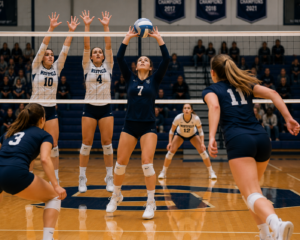
The setter is often considered the playmaker of a volleyball team. Their primary responsibility is to deliver accurate sets that allow hitters to attack the ball effectively.
Because they touch the ball on nearly every offensive play, setters play a crucial role in keeping the team’s offense organized and unpredictable.
- A good setter must have excellent ball control, quick decision-making skills and strong communication with teammates. During a rally, they evaluate the opposing team’s defensive setup and decide which hitter has the best opportunity to score.
- This ability to make smart decisions under pressure can significantly impact a team’s success.
- In addition to setting, setters contribute in several other ways. They call plays, help coordinate the offense, cover hitters after attacks and play defense when needed. When positioned in the front row, setters may also block opposing attackers or surprise the defense with a well-timed setter dump, where they send the ball over the net instead of setting a teammate.
- Although height can be beneficial to play in this position, it is not the most important quality for a setter. Consistent hands, court awareness, leadership and the ability to remain calm under pressure are often what separate great setters from good ones.
- A reliable setter helps every teammate perform at their best by creating scoring opportunities throughout the match.
Outside Hitter
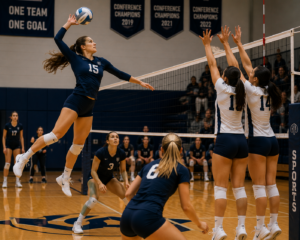
- The outside hitter, also known as the left-side hitter, is one of the most versatile players on a volleyball team. Positioned on the left side of the court, they are often the team’s primary attacker and are expected to contribute on both offense and defense.
- Offensively, outside hitters attack from the left front position and are frequently relied upon to score points, especially when a play breaks down. Since they often receive high sets in difficult situations, they must be able to adjust quickly and make smart attacking decisions.
- Whether hitting with power or placing the ball strategically, outside hitters play a key role in keeping the offense effective.
- Defensively, outside hitters are just as important. They are typically responsible for serve receive, passing the first ball accurately to the setter, and defending against opposing attacks.
- This means they need strong passing skills, quick reactions and excellent court awareness in addition to their hitting ability.
- Successful outside hitters combine athleticism, consistency and teamwork. They must communicate well with teammates, transition smoothly between offense and defense and remain composed during long rallies.
- Because this particular player perform so many different roles throughout a match, the outside hitter is often considered one of the most demanding and well-rounded positions in volleyball.
Opposite Hitter
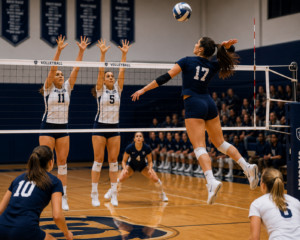
The opposite hitter, also known as the right-side hitter, plays on the right side of the court and is an important contributor on both the offensive and defensive plays. Positioned opposite to the setter in the rotation, this player provides another reliable attacking option while helping the team defend against the opponent’s strongest hitters.
- On offense, opposite hitters attack from the right front position and are often called upon to score during crucial moments. They must be capable of hitting from different angles, adjusting to various types of sets and finding ways to beat the opposing block. Their ability to produce points consistently makes them a valuable part of the team’s offensive strategy.
- Defensively, opposite hitters have significant blocking responsibilities. They frequently line up against the opposing outside hitter, who is often one of the other team’s primary attackers. As a result, they need good timing, quick footwork and the ability to read the game to form effective blocks.
- They also contribute by covering the court and supporting teammates during defensive plays.
- Successful opposite hitters combine strength, versatility and sound decision-making. While powerful attacks are an advantage, they must also communicate well, transition smoothly between offense and defense and stay prepared for every rally.
- A dependable opposite hitter helps create a balanced team by providing consistent scoring and strong net defense.
Must’ve Gear for Volleyball Players
Middle Blocker
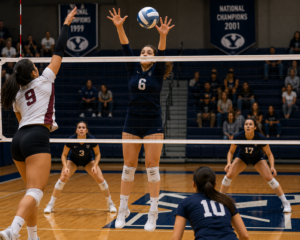
The middle blocker is the team’s primary defensive presence at the net. Positioned in the center of the front row, they are responsible for blocking opposing attacks and helping protect the court from powerful hitters of your opponent team.
Their ability to read the plays and react quickly makes them an essential part of the team’s defense.
- One of the middle blocker’s main responsibilities is to identify where the opposing setter is likely to send the ball and move into position to form an effective block. They often work alongside the outside or opposite hitter to create a solid double block, making it more difficult for attackers to find open spaces on the court.
- On offense, middle blockers are known for running quick attacks close to the setter. These fast-paced plays can catch the opposing defense off guard and create valuable scoring opportunities. Because these attacks happen so quickly, middle blockers must have excellent timing and maintain strong communication with the setter.
- Successful middle blockers combine agility, jumping ability and quick decision-making. They constantly transition between blocking, attacking and preparing for the next play, making endurance and court awareness just as important as height.
- A dependable middle blocker strengthens both the team’s defense and offense, helping control the pace of the match from the center of the net.
Libero and Defensive Specialist
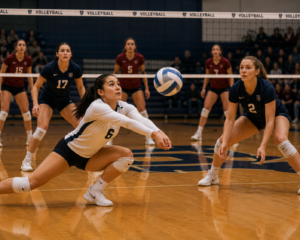
The libero and defensive specialist are back-row players who focus on improving the team’s defense and ball control. While they share many of the same responsibilities, there are important differences between the two positions.
- The libero is a specialized defensive player who wears a different-colored jersey and can replace any back-row player without counting as a regular substitution. Liberos cannot complete an attack hit if the ball is entirely above the top of the net, block or attempt to block or serve in most volleyball competitions, although some leagues allow them to serve in a designated rotation.
- Their primary responsibilities include serve receive, digging powerful attacks, covering hitters and making accurate passes to start the offense.
- A defensive specialist performs many of the same defensive duties, including passing, digging and receiving serves. Unlike the libero, however, a defensive specialist is a regular substitute and must follow the team’s substitution rules.
- Depending on the competition’s regulations, they may also serve and, if they rotate to the front row, attack or block.
- Both positions require quick reactions, excellent ball control, strong communication and the ability to read the plays. Whether it’s the libero keeping rallies alive or the defensive specialist providing reliable back-row support, these players play a vital role in maintaining possession of the ball and creating opportunities for their teammates to score.
How to Choose the Right Volleyball Position for You
- Choosing the right volleyball position depends on your skills, physical abilities and playing style. While coaches often determine where players fit best, understanding your strengths will help you identify the position that suits you most.
- If you enjoy leading the offense, making quick decisions and setting up teammates for attacks, the setter may be a great fit. Players who like scoring points and contributing on both offense and defense often thrive as outside hitters.
- If you prefer attacking from the right side while taking on key blocking responsibilities, consider the opposite hitter position.
- Those who excel at reading the plays, blocking at the net and running quick attacks may find success as middle blockers. On the other hand, players with excellent ball control, quick reflexes and a passion for defense often enjoy playing as a libero or defensive specialist.
- Keep in mind that your first position doesn’t have to be your permanent one. As you gain experience, improve your skills and grow physically, your strengths may evolve, allowing you to succeed in a different role.
- Stay open to learning, listen to your coach’s feedback and continue developing all aspects of your game. The more versatile you become, the more valuable you’ll be to any volleyball team.
-FAQs on the Volleyball Positions
Can a Volleyball Player Switch Positions During a Season?
Yes. Players can switch positions as they develop new skills, improve physically or meet their team’s needs. Coaches may move players to different roles if they believe another position better suits their strengths or benefits the team’s overall performance.
Which Volleyball Position Touches the Ball the Most During a Match?
The setter typically touches the ball more than any other player because they direct the team’s offense. They receive the second contact on most rallies and decide which teammate will attack, making them one of the busiest players on the court.
Do All Volleyball Positions Require Different Skills?
Yes. While every player should understand the fundamentals of passing, serving and communication, each position emphasizes different skills.
For example, setters focus on ball distribution, middle blockers on blocking, hitters on attacking and liberos on defense and ball control.
Conclusion
The main reason for defining various volleyball positions on the court is to provide roles for each player that they need to perform during a match.
I am sure that by now, you’ll have a thorough idea on what are the volleyball positions and how each one contributes to the overall success of the team.
It’s your turn.
What are your thoughts about this guide?
Which is your favorite volleyball position?
Share in the comments section below!
Related Posts
Here’s Everything Players Need to Know About the Types of Hits in Volleyball
Types of Blocks in Volleyball: A Complete Guide
Types of Attacks in Volleyball Every Hitter Should Know
LET’S BE SOCIAL!

I am familiar with most of these volleyball positions, as I used to watch games when I was in high school. However, it is the libero position that I’m least familiar with. Thanks for the breakdown.
Hi Jen, so glad to know that you learned something about volleyball positions from this post and watched volleyball matches during your high school days.
I really never knew what the positions in volleyball were. For the uninitiated like me, it just looks like everyone is running around. I loved this one.
Hi Ben, so glad to know that you’ve learned something new about volleyball from this post.
Great breakdown! Easy to follow and really helpful for understanding each volleyball position.
Hi Claudia, thank you very much!
Alot of information in one post. I think the vegin each player should understand each position of play. Gives an idea of what to expect plus you get an idea if one position suits you better. My daughter played soccer. Learned to play each position – had an awesome coach. Ended up being identified as a utility player bc she could play anywhere you put her. I think volleyball works the same way.
Hi Mary Ann, thank you very much for your kind words. So glad to know that your daughter played soccer and really excelled in all positions.
This makes it so much easier to understand volleyball positions. I was confused about back-row defense, but not anymore. Thanks!
Hi Mahy, so glad to know that you’ve learned about volleyball back row defense positions from this post.
Great breakdown of the different volleyball positions! This is a helpful guide for both beginners and players looking to better understand how each role contributes to the team. I especially like the emphasis on teamwork and communication, since every position plays an important part on the court.
Hi Lisa, thank you very much. So glad to know that you found this post helpful for volleyball players of all skill levels and I totally agree with your last point.
Such a helpful breakdown of volleyball positions! I love how clearly you explained each role, it can be confusing for beginners. This is a great resource for players and parents who are new to the sport.
Hi Trish, thank you so very much!
Having the positions explained has helped me make sense of the game more. I do enjoy your posts explaining all about the game
Hi Samantha Donnelly, thank you very much and I am so glad to read that!
I enjoyed learning how every position contributes differently during matches. The practical explanations make this guide both educational and engaging.
Hi Marie Cris Angeles, thank you very much. So glad to know that you learned something new about volleyball positions from this post.
I feel like a breakdown of the various volleyball positions is so useful in both watching and playing volleyball. Thank you for always sharing your insight!
Hi Jupiter Hadley, I totally agree with your first point. Glad to know that you learned something new about volleyball positions from this post.
I’ve tried playing as a middle blocker, but honestly, it takes a lot of skill and quick decision-making. Most days, I stick to playing as an opposite hitter because that’s where I feel more comfortable.
Hi Clarice, wow so happy to know that you played volleyball as both middle blocker and opposite hitter. I completely agree with your first point.
This was so interesting. I see all those bodies moving and playing, but I never really know who is responsible for what or why.
Hi Beth, so glad to know that you learned something new about volleyball from this post.
I had no idea there were so many different positions, I just assumed it was the front people and the back people. Shows how little I know haha x
Hi Rhian, so glad to know that you learned something new about volleyball from this post.
Thank you for sharing and explaining each volleyball position clearly and simply! I’ve definitely learned a lot from this!
Hi Lucy, very happy to know that you learned something new about volleyball from this post.
This is extremely helpful in understanding this beautiful sport, I love it…I didn’t know about the setters…Makes so much sense to me.
Hi Karen, so glad to know that you’ve learned something new about volleyball from this post.
This post is so well laid out. It explains each position so well and in great detail. I’ve found it so helpful in understanding.
Hi Yeah Lifestyle, so happy to know that!